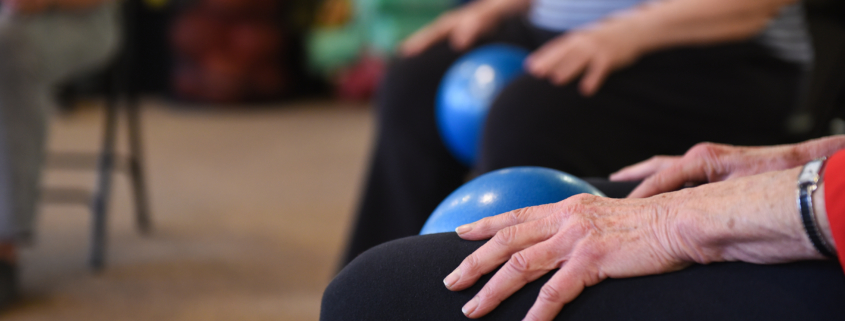
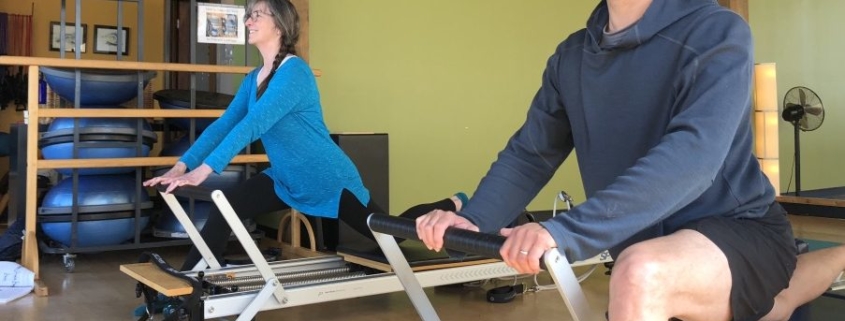
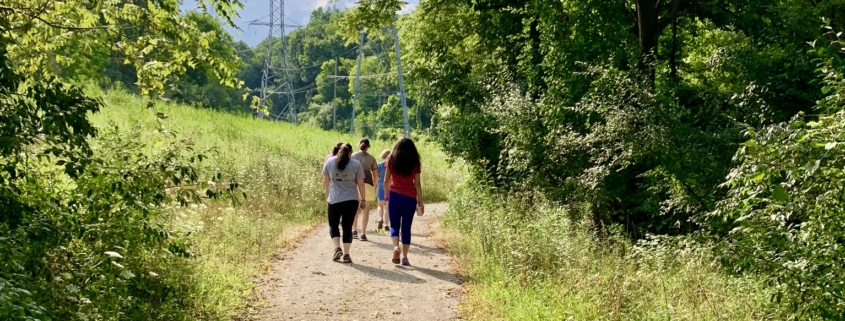
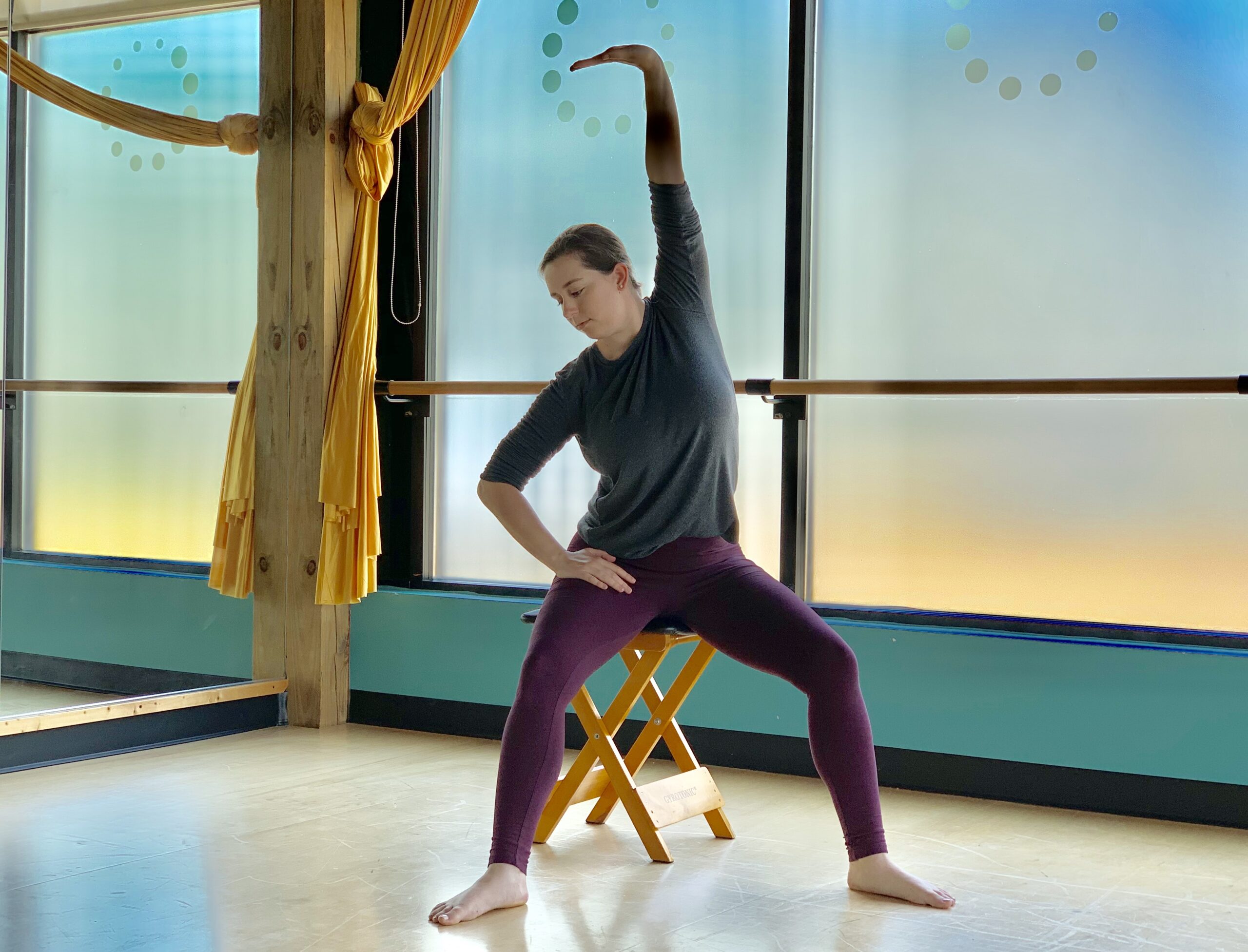
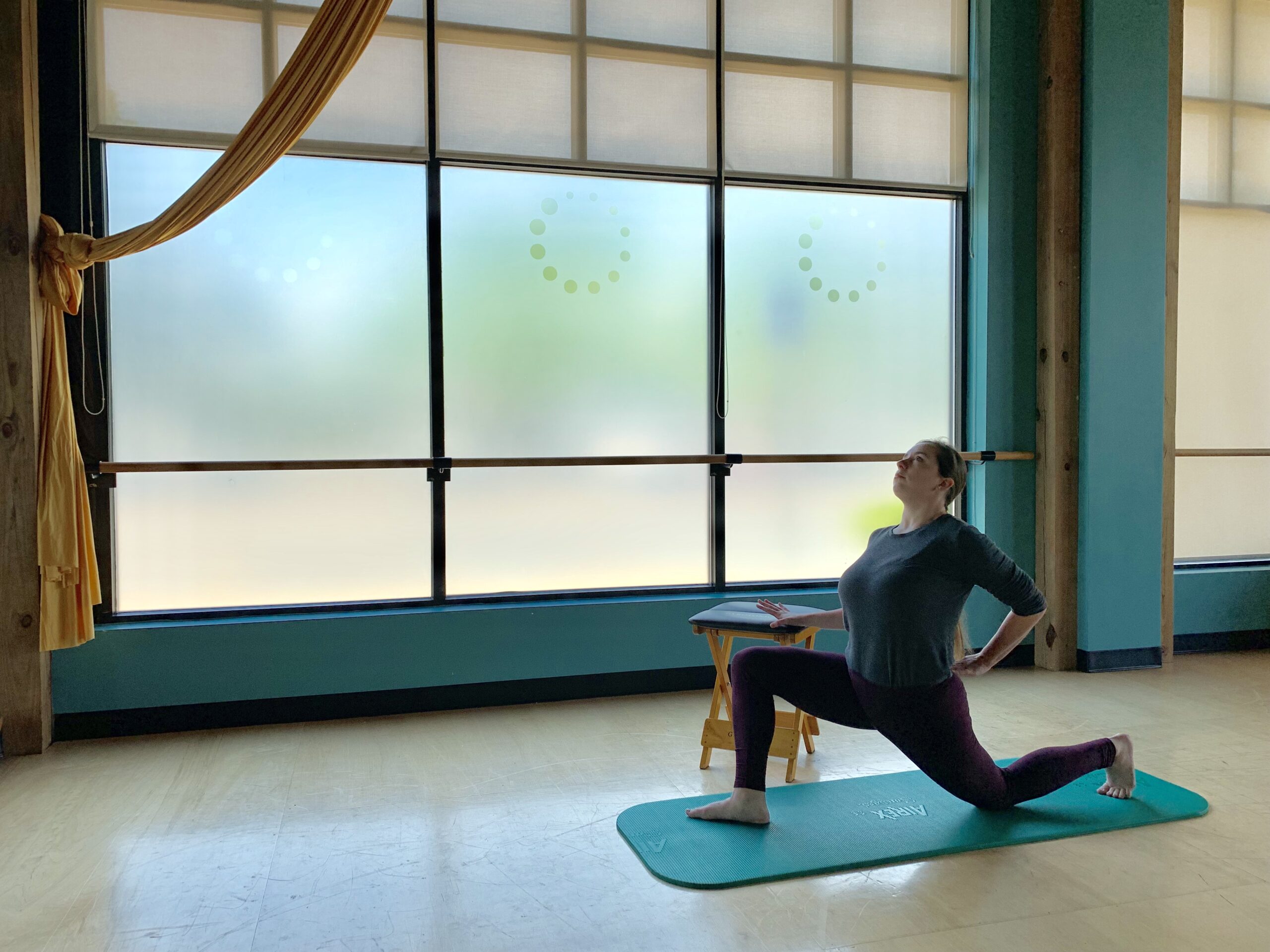
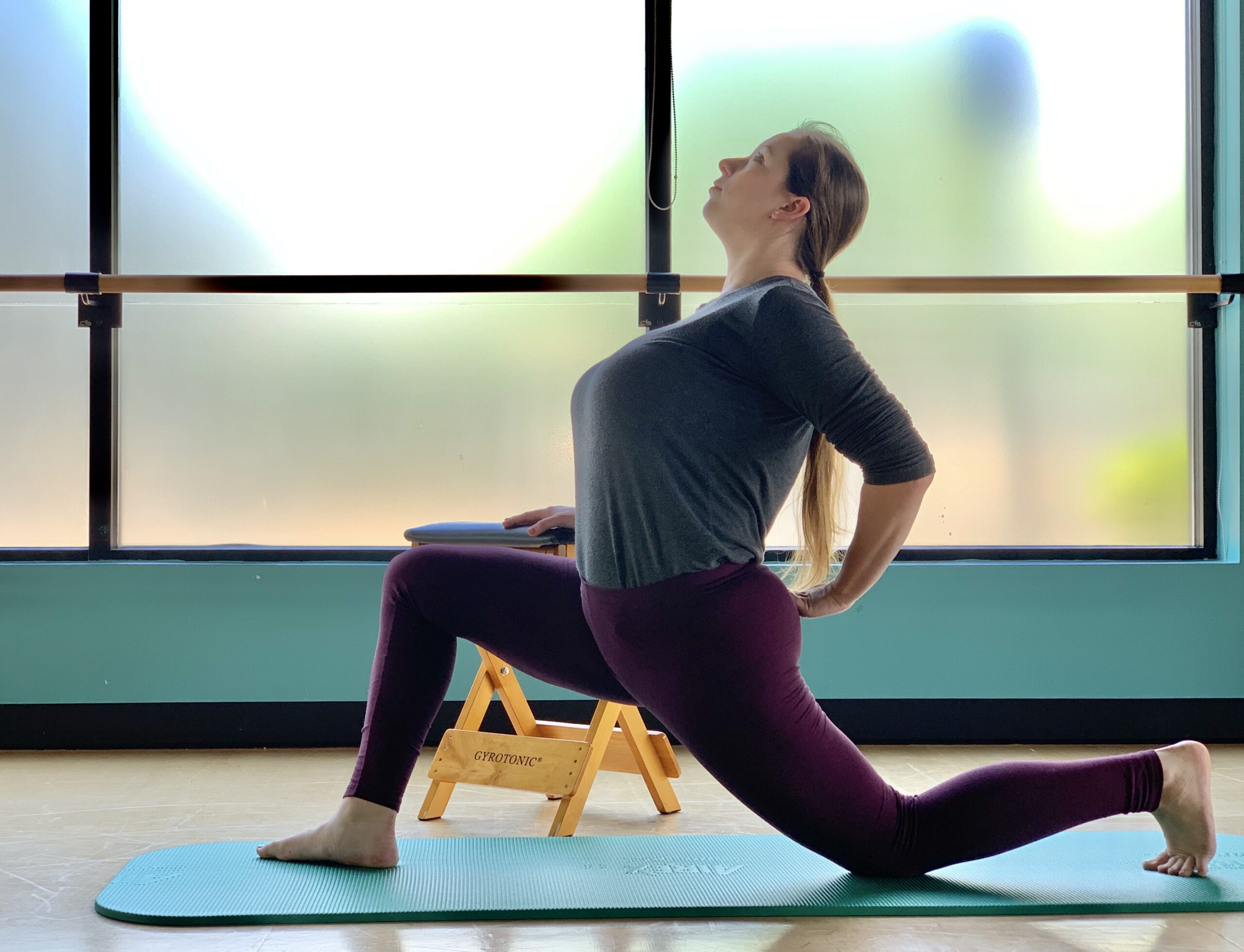
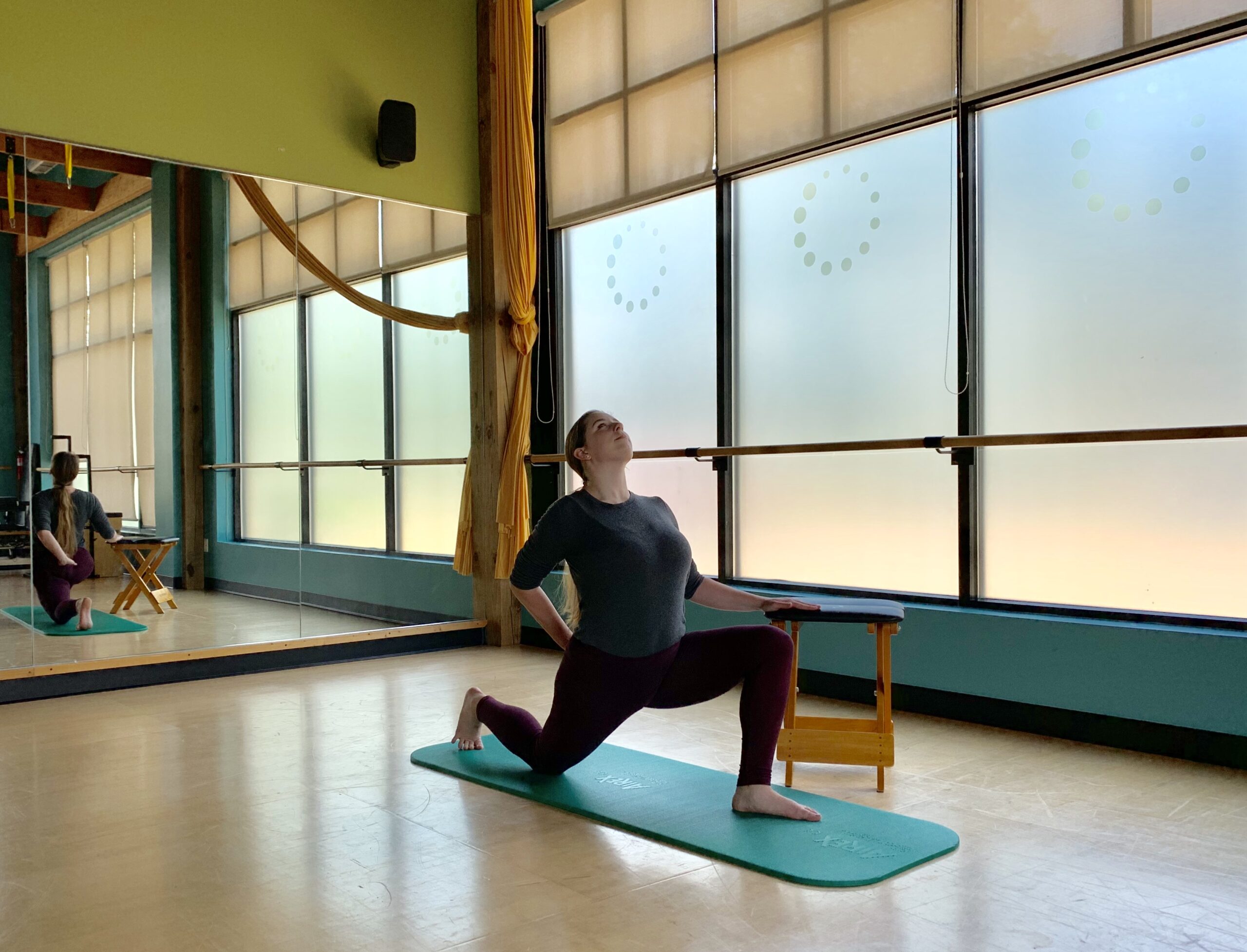
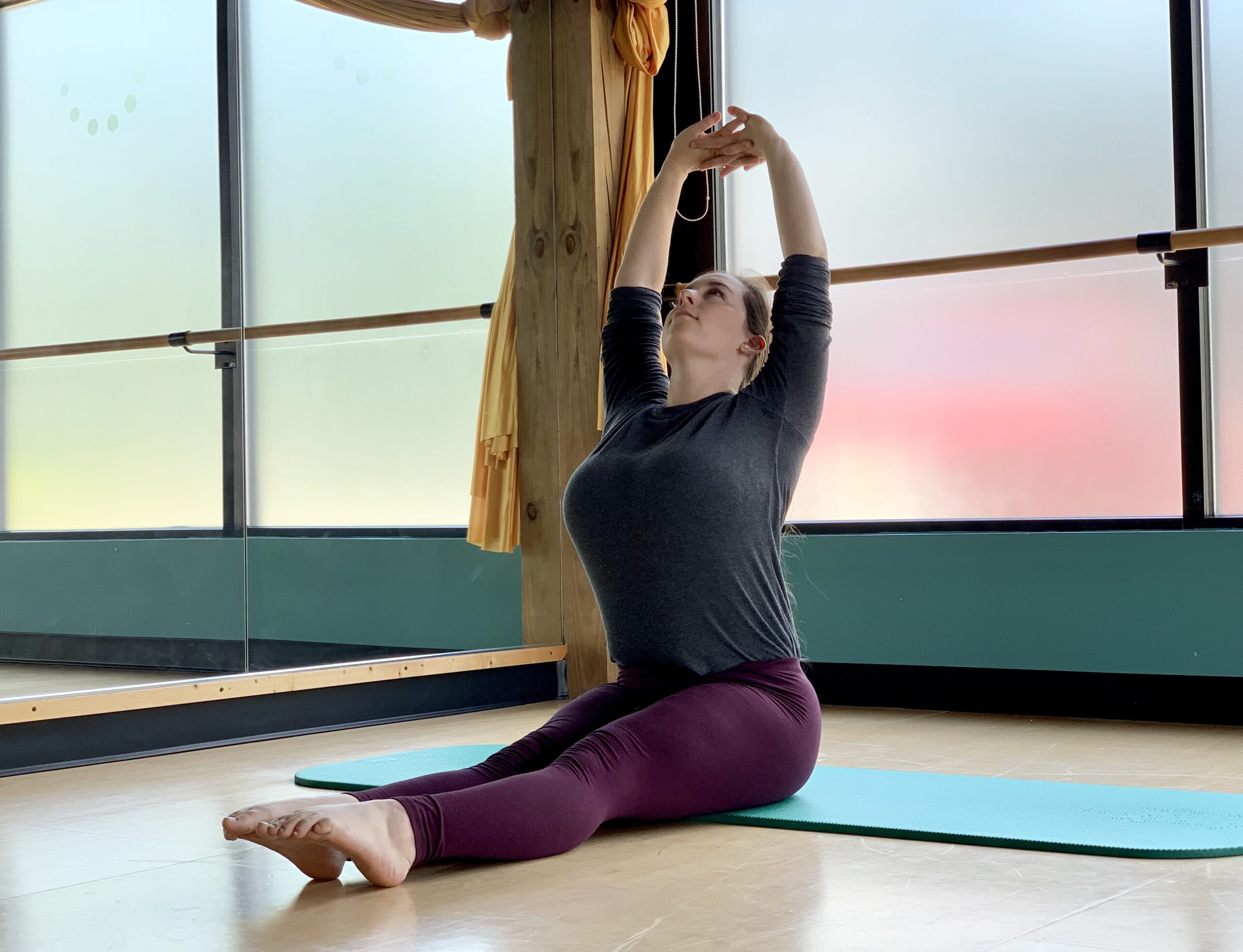
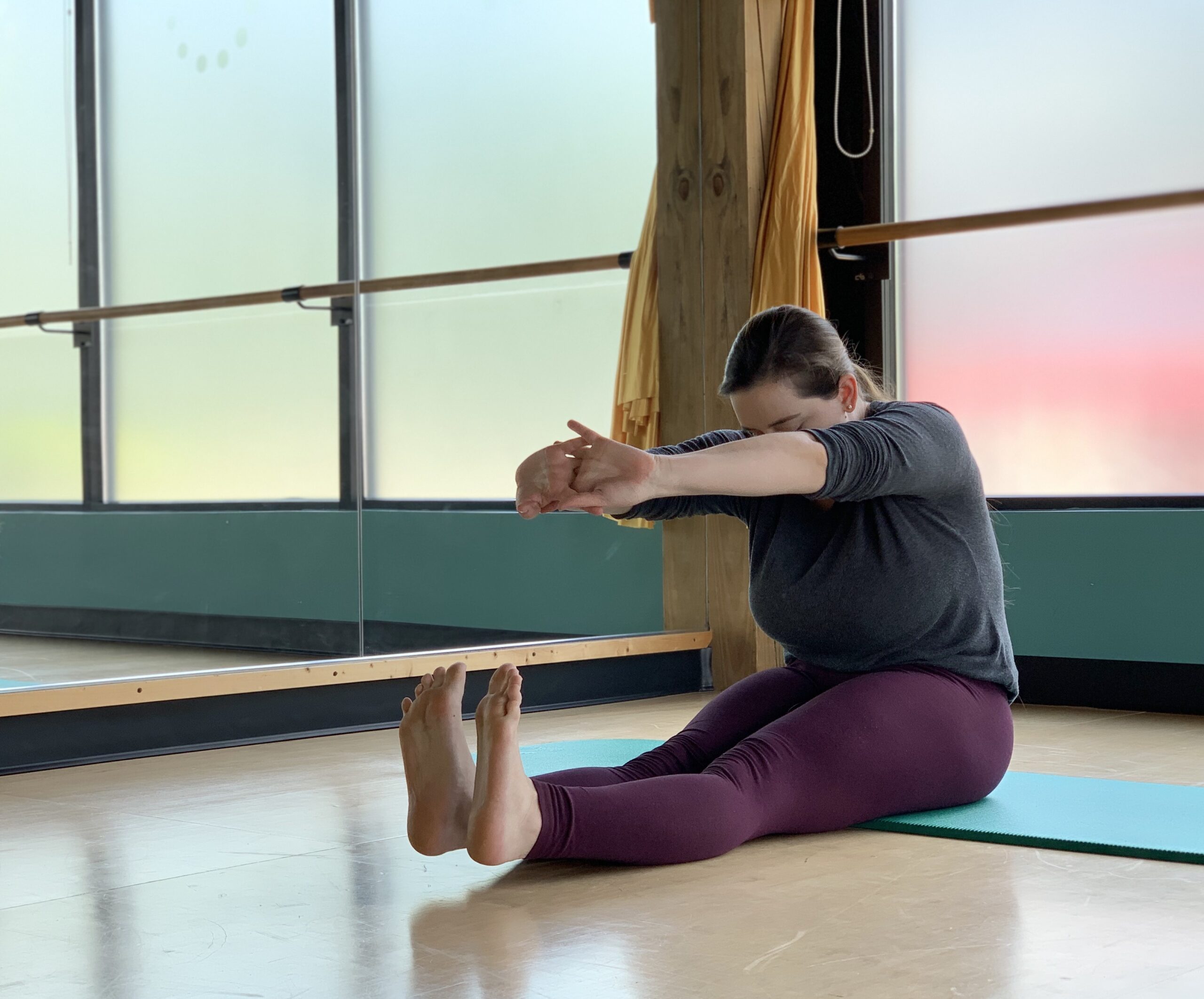
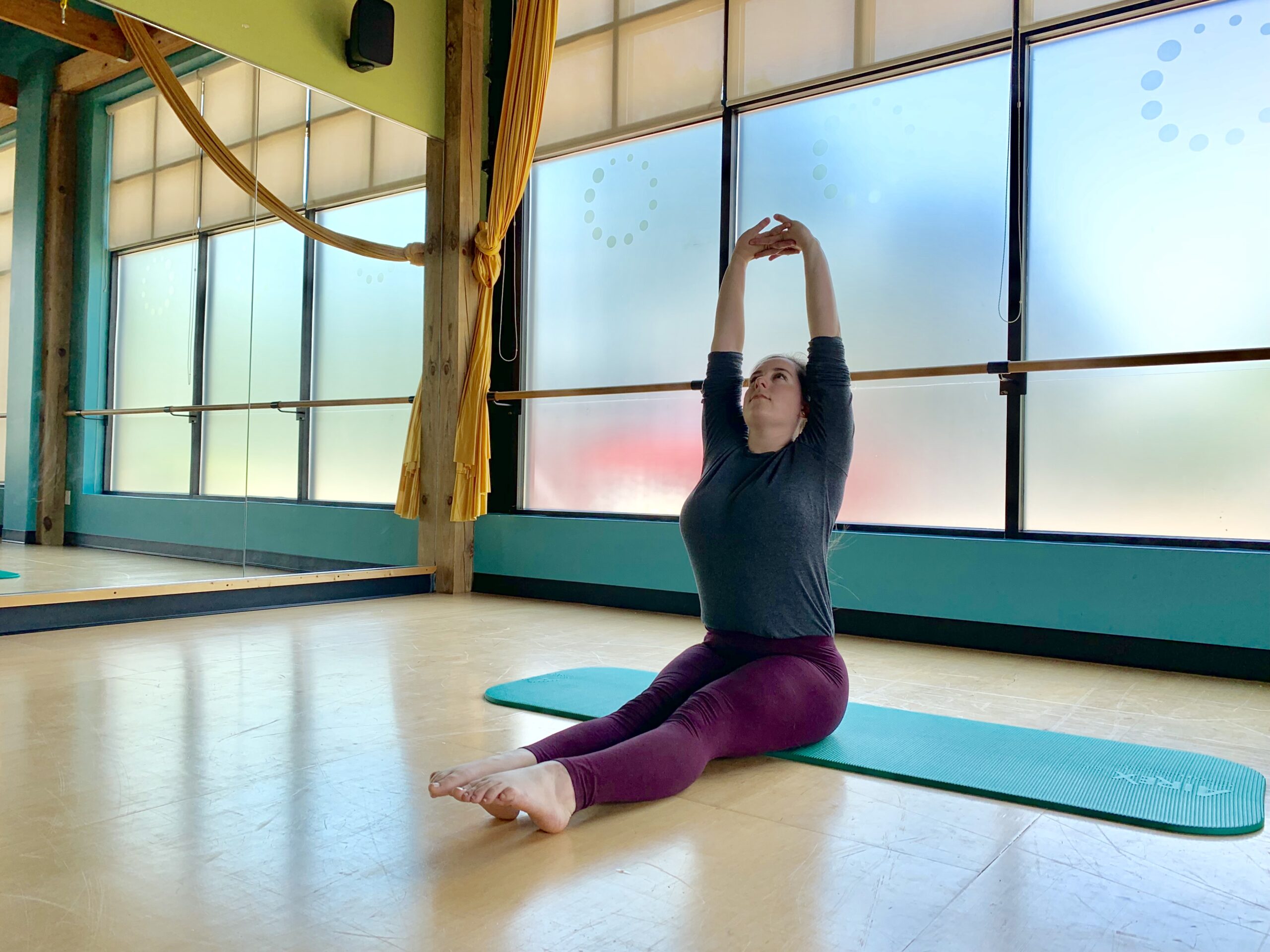
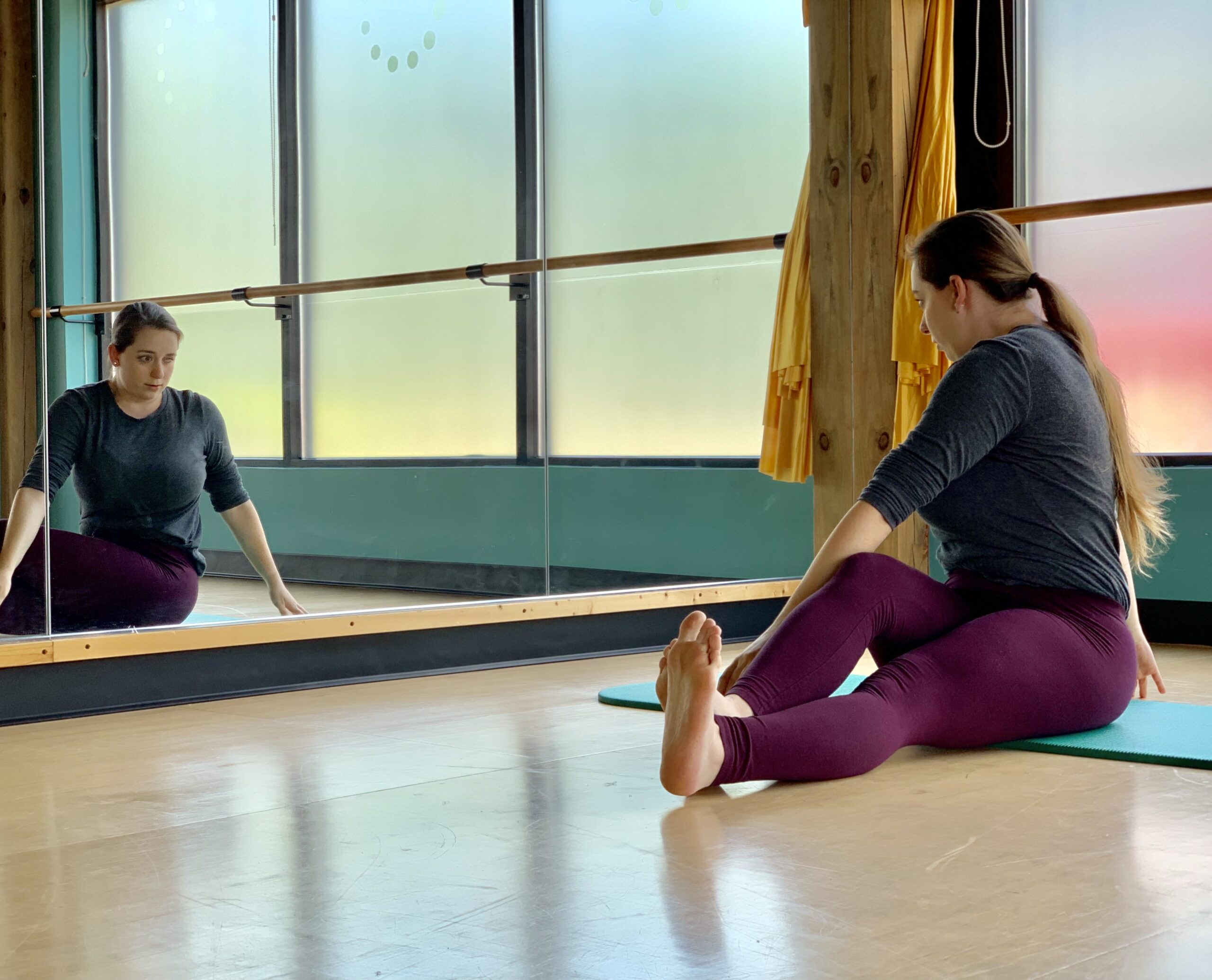
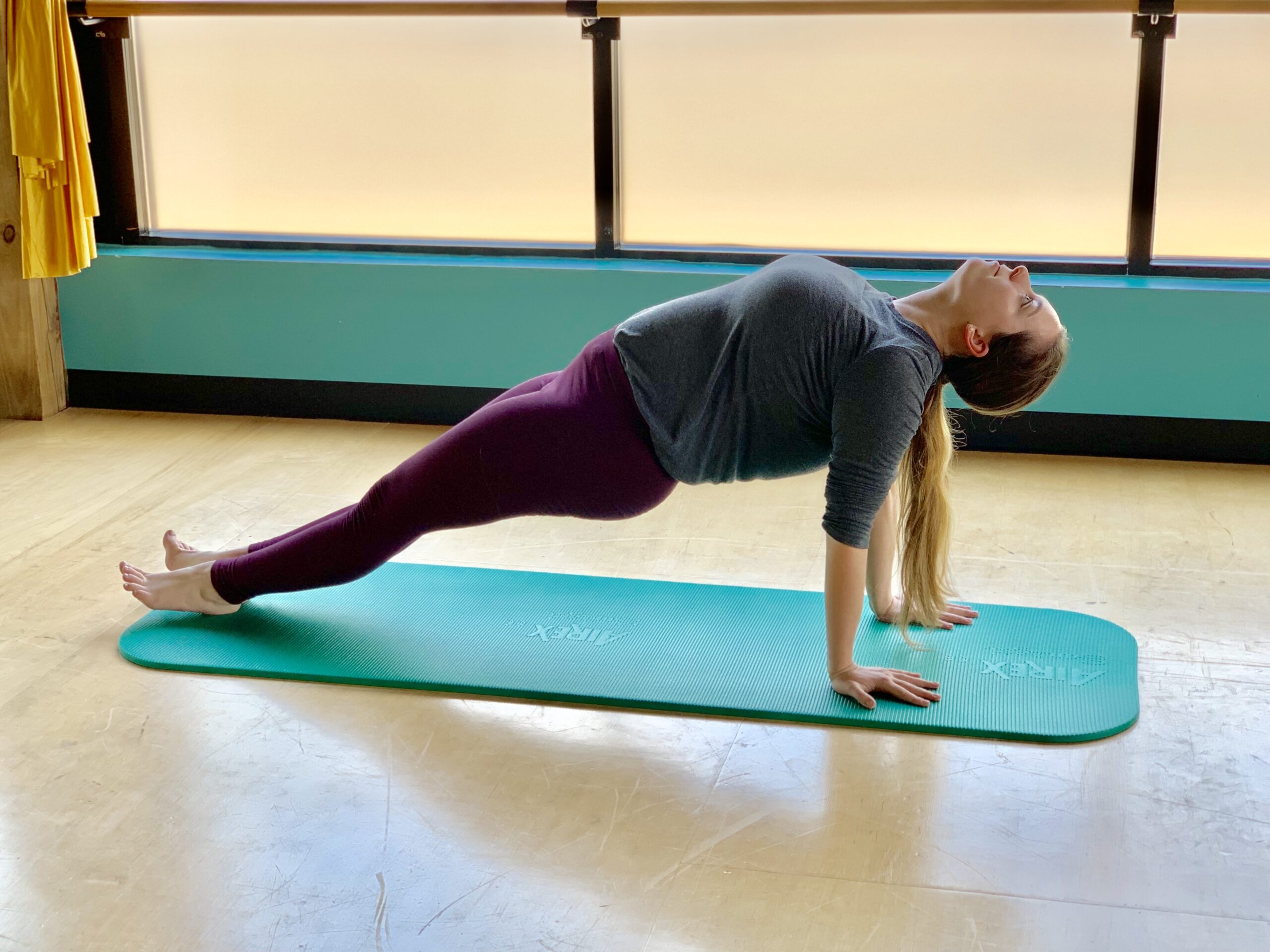
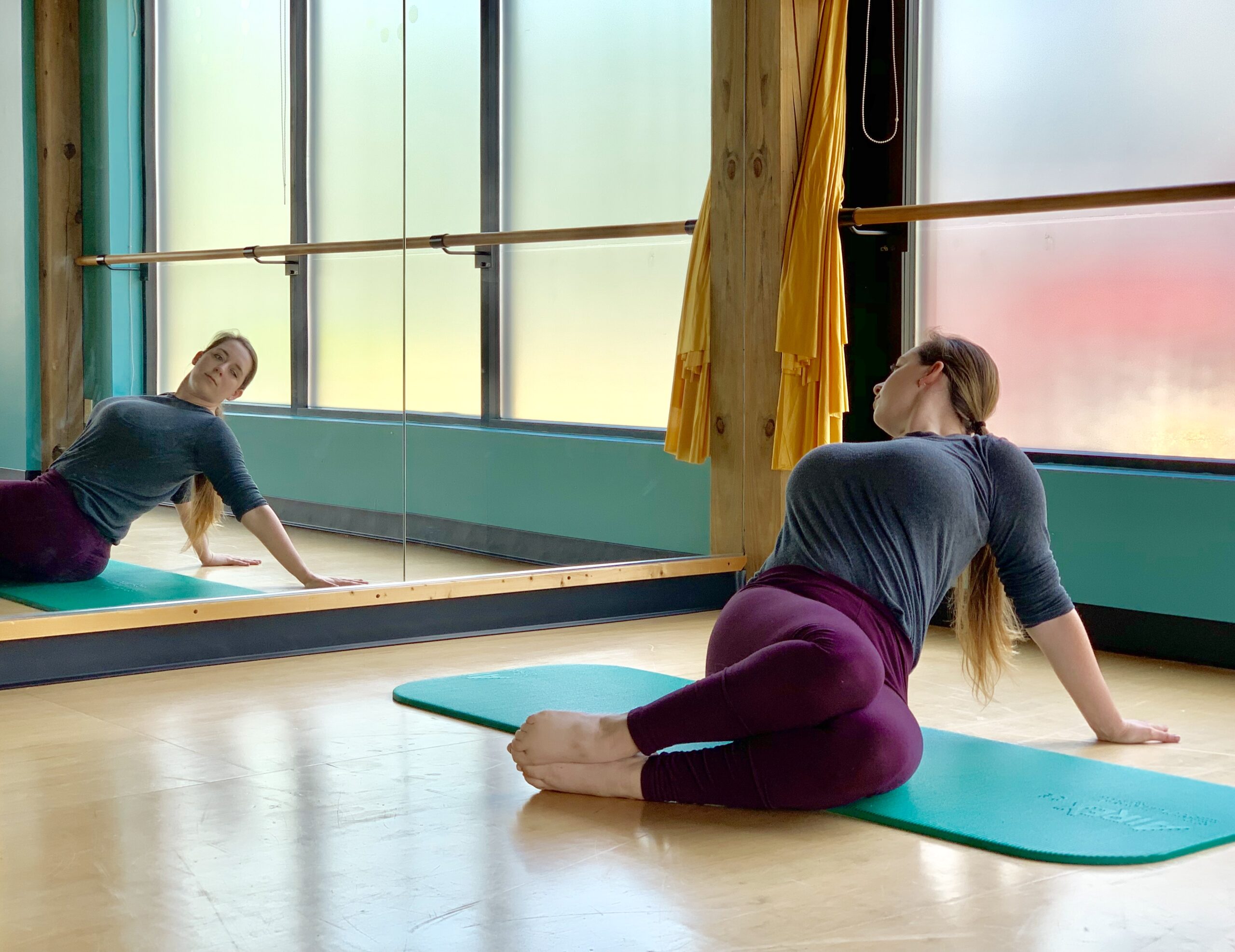
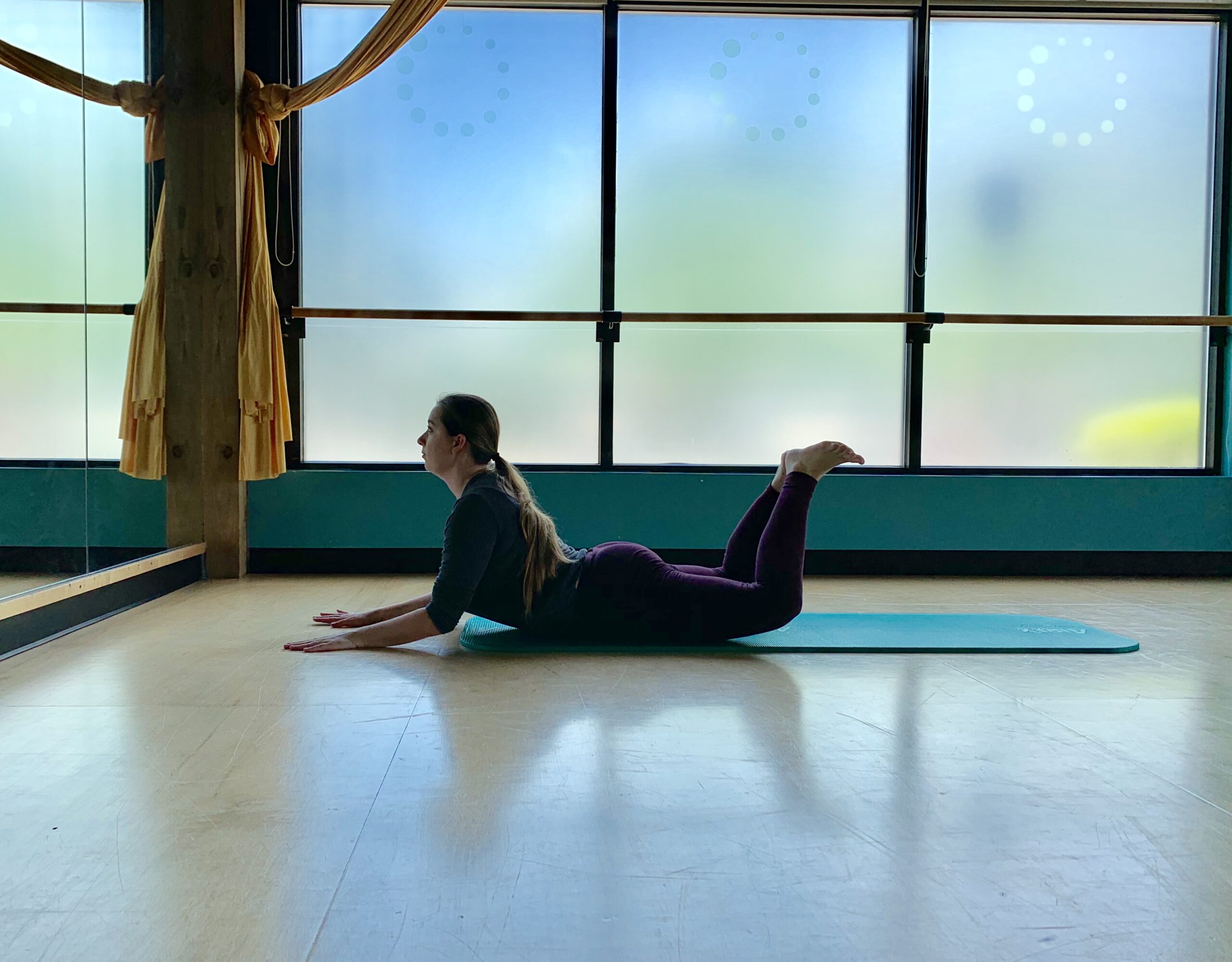
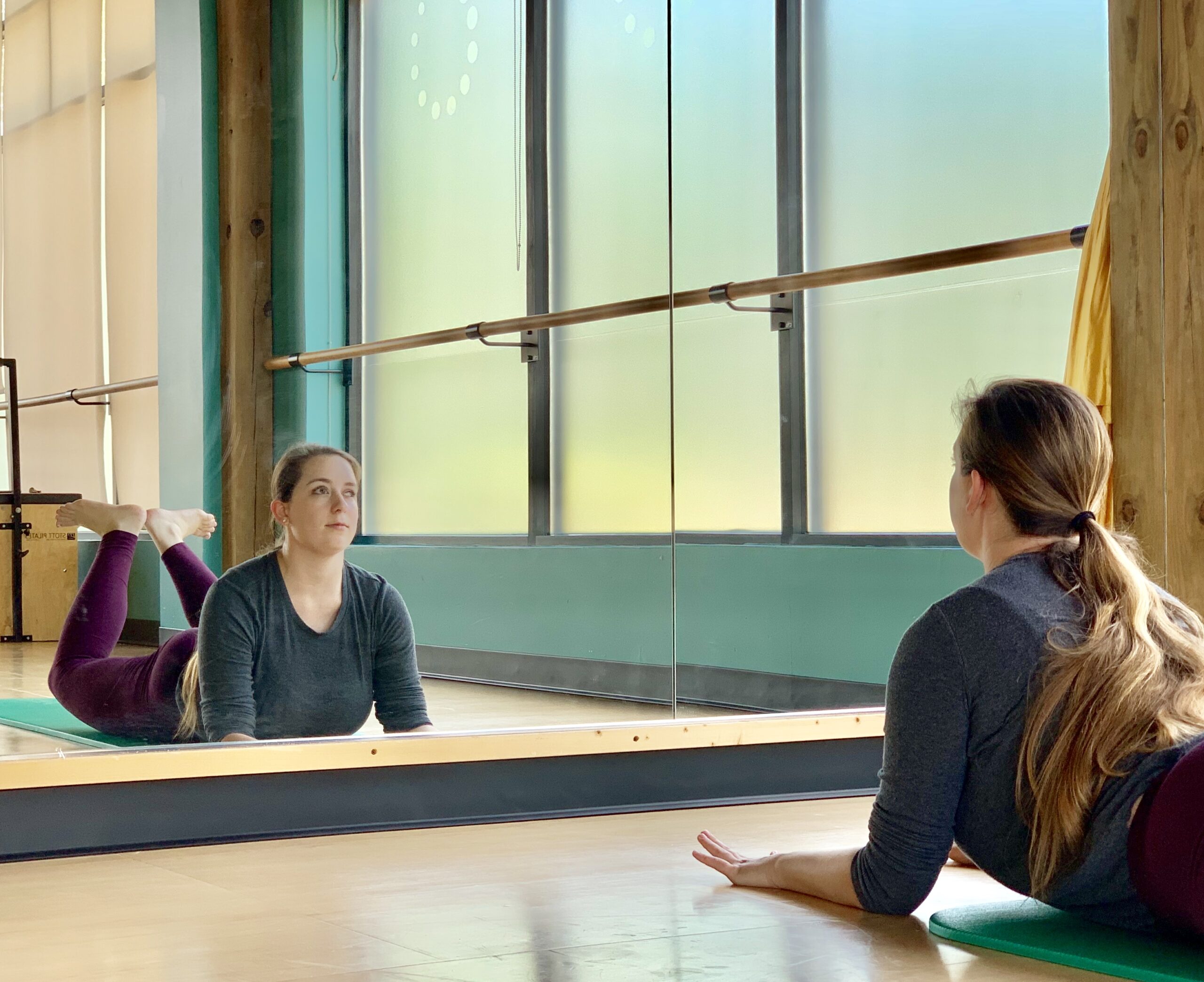
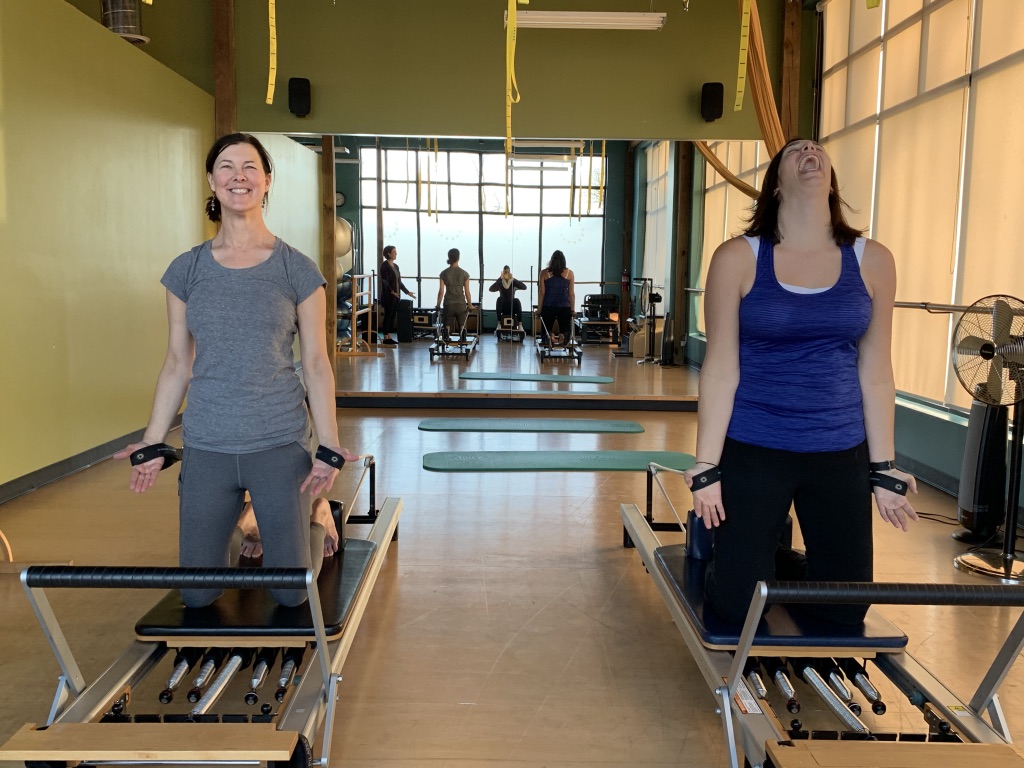
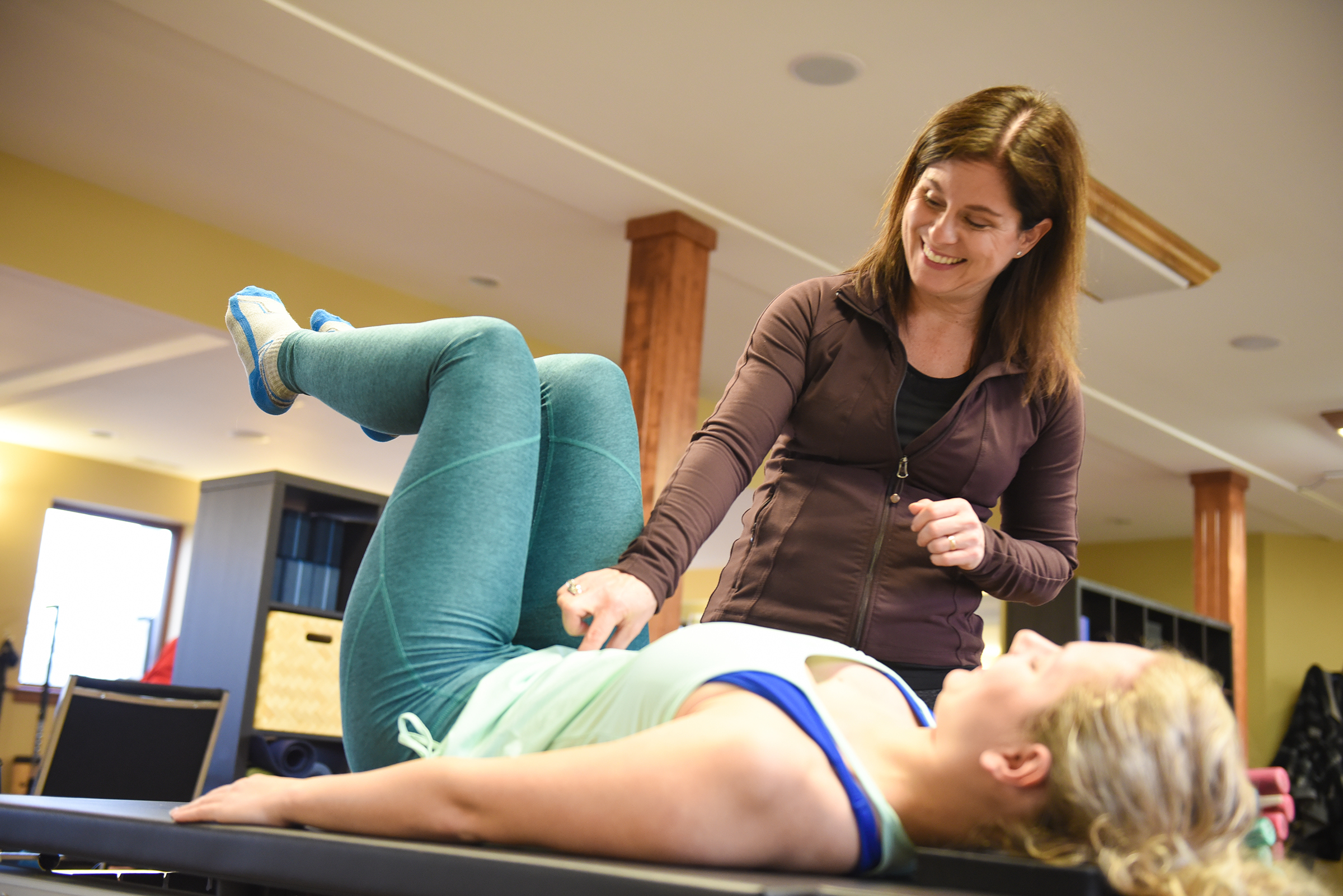
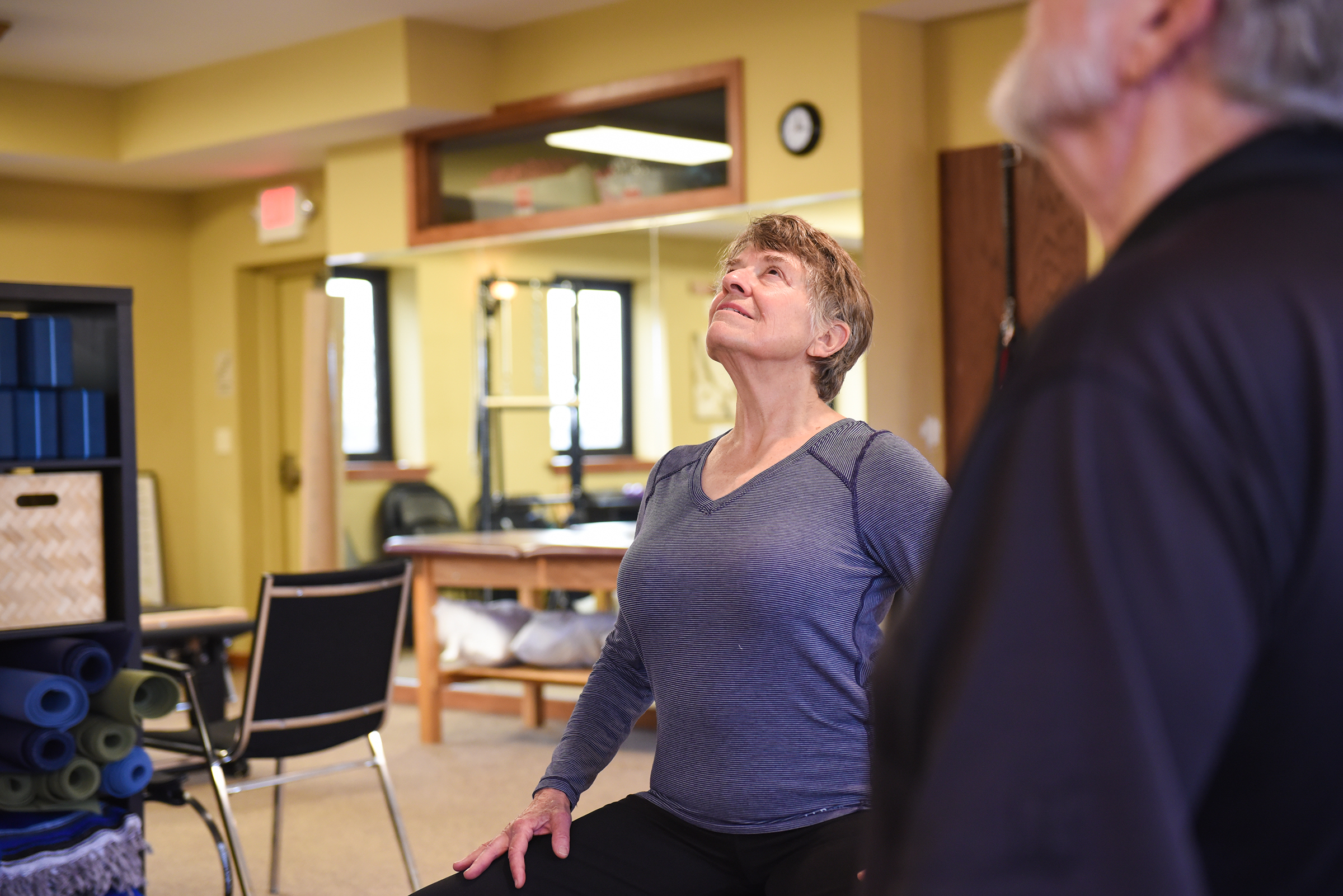
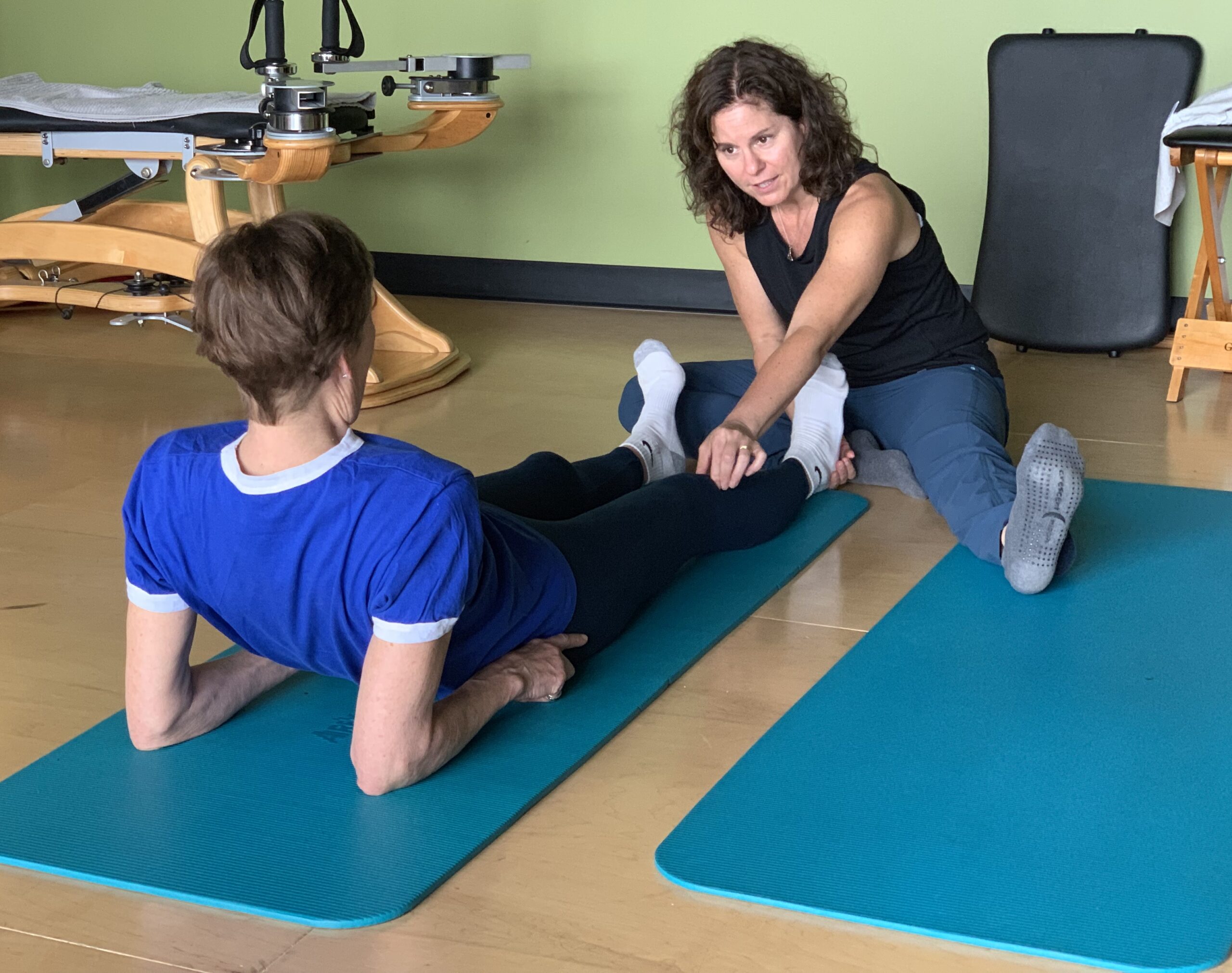
Picture this: It’s a beautiful day and you are on a walk enjoying the fall foliage. You are walking with a companion, your dog, your (grand)children, or maybe enjoying some quiet alone time. Suddenly your companion slips and grabs onto your arm. Or maybe your dog pulls forcefully on the leash to chase after a squirrel. One of the children suddenly refuses to walk any farther and insists on being carried. Or, maybe you don’t see the uneven terrain ahead, misjudge your step, and lose your balance. We’ve all experienced situations where just the acts of daily life can lead to unexpected results in our body. Functional training can help prepare us for these moments.
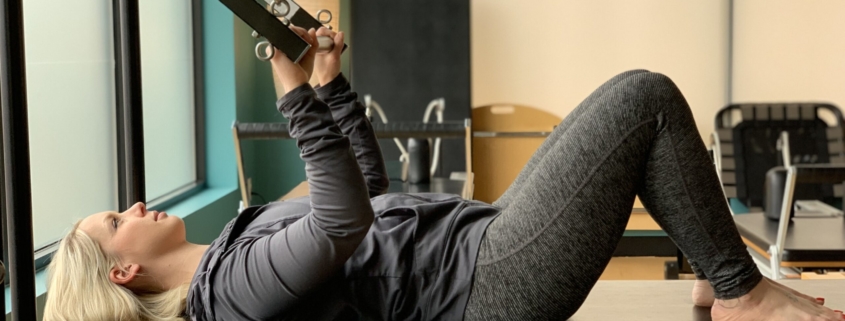
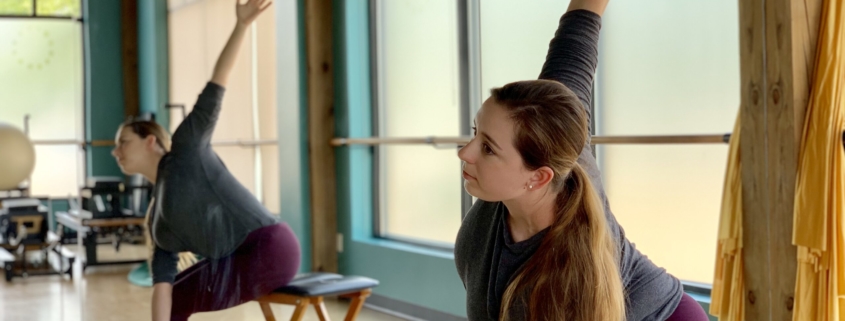
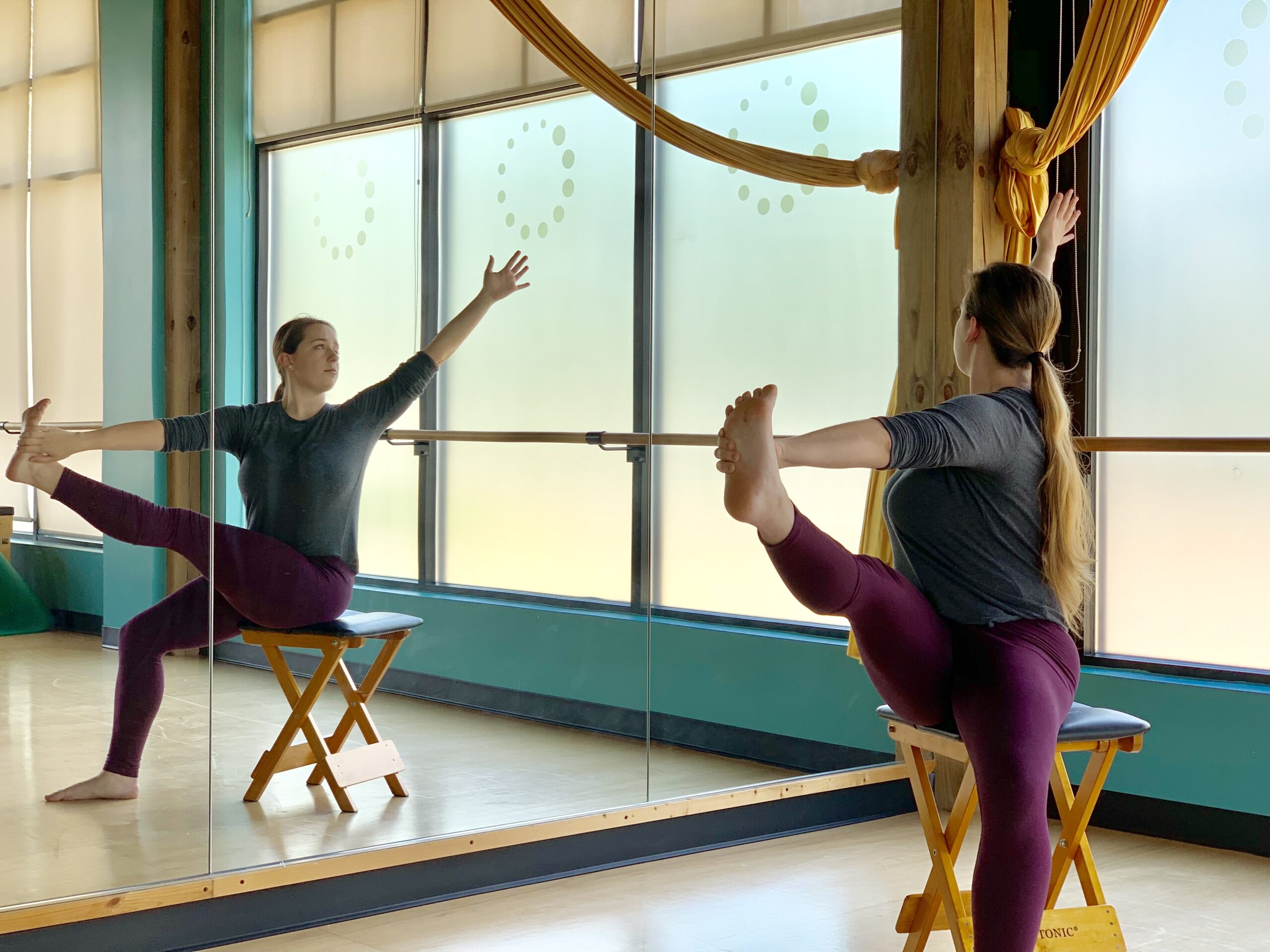
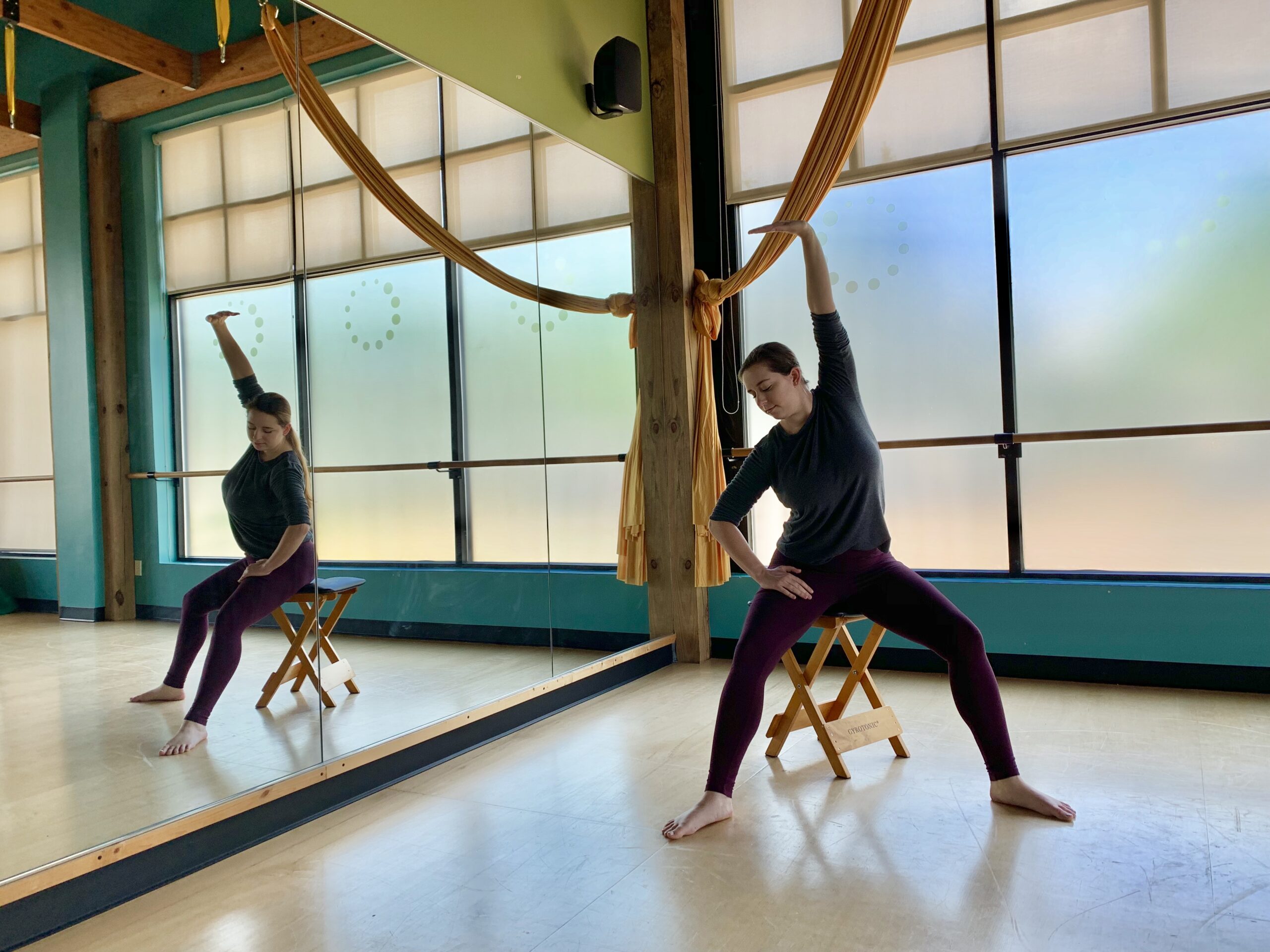
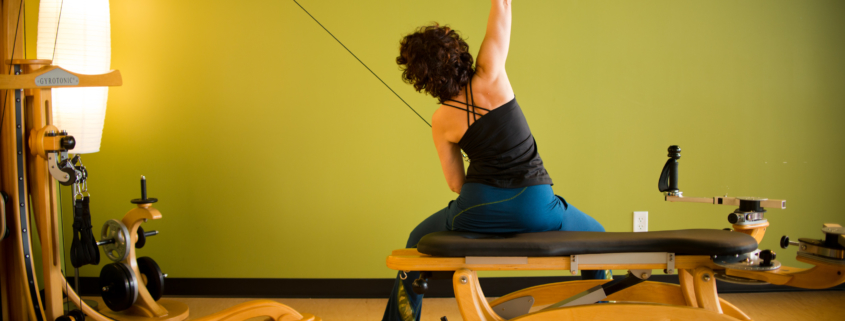
Functional training is targeted movement that works the body and muscle groups in ways that support the activities of daily life to help you feel better as you move through your day and reduce risk of injury. Both Pilates and GYROTONIC® exercises can be used as functional training for a variety of lifestyles and functional fitness goals.
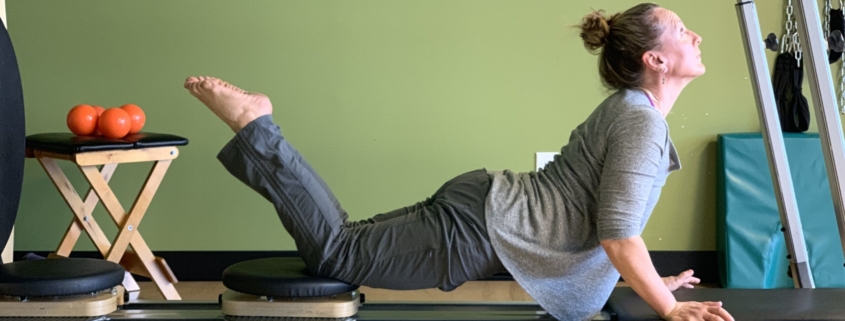
For most people, training the body to meet the activities of daily life means making sure that you move your spine in all of its planes of motion every day so that the small muscles that stabilize the spine stay active. Even gentle spinal motions like cat stretches and easy rotations like side lying spinal rotation and arm circles that bring you into a bit of spinal extension can help you maintain the mobility necessary for everyday movements. Exercises like squats, single leg lifts and side leg lifts will keep the lower body kinetic chain active and strong.
Pilates and GYROTONIC® exercise as functional training
When life throws you these curveballs, how does your body respond to these changes in demand? Does your companion pull you down with them and you both get banged up, or are you able to provide a steady arm to help them regain their footing? Does your dog pulling cause you to suddenly twist and strain a muscle in your back, or is your body able to adjust to the change of directions with healthy spinal rotation? Are you able to carry a child without causing your shoulders to go on strike the next day?
As a Pilates and GYROTONIC® trainer, I want to partner with my clients to help them to move pain-free through daily life and give their body strength and resources adapt to unexpected movement loads. Each of our movement loads and physical requirements is going to be unique.
For example, as a mom with small children, I need my body to be able to keep up with my busy four-year-old, but also be able to play on the floor with my infant. I also need to be able to hold babies in my arms for long periods of time and lift my children from varying surfaces or heights many times a day. My functional training goal is motherhood!
In this lifestyle scenario, Pilates helps me:
Train and strengthen my deep core muscles that are also recovering from childbirth
Ensure my glutes are firing to support my movements
Keep the muscles of my shoulder strong, but mobile
Alongside the above goals, GYROTONIC® training helps me:
Keep my spine mobile and articulating in all directions (kids wiggle unpredictably!)
Lengthen my chest muscles to counteract all the hours I spend focused downward on babies
Strengthen my erector spinae muscles that keep me upright and tall
What type of life are you training for? Is it a life that can react quickly and adapt to changes without causing injury? There are many stages of life that can be served by this approach to training. You may not have babies, but maybe you have a desk job that takes a toll on your body. Or you may spend a lot of time in a committed relationship with your laptop or cell phone. Maybe you love to work in your garden, or have the vacation of a lifetime coming up. Every life has movement challenges. You don’t need to be training for a half marathon to have a goal for your Pilates or GYROTONIC® practice.
Pilates and GYROTONIC® exercise are both effective functional training methods to support your life’s activities, whatever that may encompass. We hear messages often about how we are supposed to look, but if your body doesn’t allow you to live a joyous and active life, what’s the point? Training goes deeper than face value, and as a trainer I care more about helping you train your body to support YOU. It’s not about how you look it’s about how you MOVE.
You Can Start Now
MOVE Wellness has experienced trainers who can help you workout safely and effectively and provide accommodation for any injuries or nagging pains. Talk to your trainer about your personal goals for the movement that matters in your life so we can support you in achieving those goals. MOVE offers private training in-person or online as well as MOVE Livestream with interactive livestream group classes you can take from the comfort and privacy of your own home. In addition, MOVE On Demand offers programs and classes you can access whenever and wherever you want.
Davy Darnton is a STOTT PILATES and GYROTONIC® trained instructor, who loves to challenge her clients and help them feel great in their bodies. She believes that we all have the power to heal our bodies through movement. Davy is Certified in STOTT Pilates Mat & Reformer work, Prenatal & Postnatal Pilates, Pilates for Diastasis Recti and is a GYROTONIC® Apprentice Trainer. Davy’s love of movement began at a young age when she first discovered gymnastics. Through her school years she was a competitive gymnast and gymnastics coach. During college Davy studied International Affairs at Ohio University and post college pursued development work as a Peace Corps Volunteer in Zambia. She is passionate about health prevention and education, women’s health, and holding space for healing to occur. Davy is returning to MOVE from maternity leave after welcoming her second child and works with clients of all ages and populations, including: post-rehab pilates, prenatal and postnatal pilates, chronic illness, cancer survivors, elder adults, athletes, runners, joint replacement, and anyone who has ever sat at a desk.
Creating opportunities for community and personal wellness is at the heart of what we do at MOVE. In that spirit, we launched our new Osteoporosis Discussion Group for members this summer. At our meeting on October 4 we were joined by Dr. Amy Saunders, a board certified internal medicine physician in Ann Arbor who shared her thoughts and expertise on bone health medicine and research. We are happy to say that Dr. Saunders will return to MOVE on January 10, 2020 to continue to explore this important topic.
An interest in treating osteoporosis
Dr. Saunders received her MD degree and completed her internal medicine residency at Ohio State University, followed by a research fellowship at Duke University. While on the faculty at Duke, she engaged in clinical work with osteoporosis. Working closely with aging patients who had their own questions about bone health and managing osteoporosis, Dr. Saunders developed a personal interest in understanding conventional and integrative approaches to this condition.
After 20 years on staff with Internal Medicine at the University of Michigan, Dr. Saunders began her own integrative primary care practice in Ann Arbor. She offers high-quality conventional medical care, diagnostics, and disease prevention bolstered by a broad understanding of integrative nutrition, energy work, manual therapy, and non-pharmacologic alternatives for the management of chronic inflammatory conditions. And when she’s not doing all of that, she’s traveling, listening to music, gardening and spending quality time with her family.
Let’s talk bone health and osteoporosis
MOVE trainer Lauren Miller has been setting the bar for our osteoporosis discussion group with one simple mantra: Move more, not less. Research shows that people with or at risk of osteoporosis should be encouraged to exercise and move more with the guidance of their physicians and movement instructors. Because overall, the benefits of physical activity far outweigh any potential risks.
Check out this amazing resource from the Royal Osteoporosis Society. Three words: Strong, Steady, Straight.
We are thrilled that Dr. Saunders will be making a return visit to our Osteoporosis Discussion Group so we can continue the conversation we started in October. Please RSVP to join us on Friday, January 10 at 2:30 p.m. as we give a warm welcome to Dr. Saunders. We hope to see you there!
This past June, we wrapped up another round of Pilates Reformer Instructor Training at MOVE. Think an hour-long intermediate or advanced reformer class is challenging? Try back-to-back days of reformer work with a little intensive academic study mixed in!
Despite the challenge, our most recent cohort of reformer instructors jumped into their straps feet first and showcased the commitment to teaching movement that you’ve come to know and love from each and every MOVE team member.
Below are some highlights from this summer’s training.
Interested in giving Pilates a try with the support of one of these smiling, movement-obsessed faces? Get started today by signing up for an introductory session.
If the shoe fits, then put it on and go for a walk. At least we think that’s how that saying should go! Walking is one of the best things we can do for our overall physical and mental health. Coincidentally, it’s also the most accessible form of exercise available. No fancy equipment or gym membership needed. Just throw on some shoes (or not!) and go.
Interestingly, walking is also one of the most overlooked and underrated ways to move our bodies because it’s such a constant in our lives. We do it in some form or another every day and because of that we sometimes fail to see it as the exercise powerhouse that it is.
Walking is a perfect complement to your weekly Pilates and GYROTONIC® practice. And it’s an easy way to incorporate mindfulness into your daily routine and life.
“Connection between breath and awareness of the body is what we practice in any kind of movement session,” says MOVE CEO Elaine Economou. “And that’s exactly what we’re doing when we walk too. Really sensing your body–muscles, bones, tissue, organs–as you move your feet, legs, pelvis, ribs and up. It’s what our bodies were designed to do.”
When you walk, focus on making a connection between your breath and your body. Let your body move, glide, stretch, and articulate rather than tense or tighten. Feel your feet more rooted to the earth with each step. Notice each sensation for what it is, without passing judgment or looking for faults.
Relish the fresh air on your skin, indulge in the smell of trees, grass, water or whatever is around, and bask in the warmth of the sun or the crispness of the cold. Walking is the quintessential mind-body experience through which we can connect to our environment.
Walking for cardiovascular health and strength
Even today, with everything we know about wellness and movement, many people still believe that you need to go out and run five miles to get a good workout. And that’s just not the case.
“I encourage people to be intentional about their walks in order to achieve a desired goal,” says Elaine. “If you’re walking to receive the cardiovascular benefit or to increase strength and stamina, decide on a set distance or duration for the walk. Then from there, find a pace that allows you to feel slightly winded but still able to talk.” Once you’ve established a starting pace, you can work to increase your pace and distance over time.
You can add intervals of brisk walking to your walk to maximize the cardiovascular benefits and reproduce the same positive metabolic effect you’d get from a classic HIIT (high-intensity interval training) workout. Intervals can be as short as 20-30 seconds or as long as a few minutes depending on your comfort level. Brisk walking also puts a consistent, managed amount of force on your bones that can help combat osteoporosis.
As your walking effort and frequency increase, you can work with your movement instructor to make sure you’re incorporating effective stretches into your routine to maintain alignment. Stretches for the hips, legs and feet are essential. But remember, walking is a whole-body activity. Paying attention to our upper bodies is critical even when it feels like the work is happening in our lower halves.
Creative ways to get more steps into your day
Start a morning ritual by walking a favorite route before breakfast.
Institute “walking meetings” with colleagues at work.
Park farther away when you’re out running errands.
Do laps around the mall in winter when it’s too cold or icy outside.
Take the stairs or find some stairs!
Adopt a dog and let her nose lead the way.
Go find or leave a book at a little free library in your neighborhood.
Our favorite places to walk around Ann Arbor
Walking and running in and around the Ann Arbor area is hard to beat. From meditative walks in the woods to invigorating river runs, the beautiful options we have available to us for moving our bodies in the world and exploiting the many health benefits of walking are endless.
Here are a few favorite places to walk and run for MOVE staff members:
Walking along the Huron River with Lauren Miller
“One of my favorite places is next to the Huron River. There are paths that run along the river starting from Argo Livery. You can do a nice loop of you head north through the woods next to the river, cross the bridge on the north side of Bandemeer Park and then eventually cross back over at Argo Dam. The path takes you through the woods and hugs the river the whole time. And it’s all within walking distance of downtown Ann Arbor.”
Trail-walking at Dexter Mills with Laura Tyson
“I love the Dexter Mills trail in Dexter. Walking next to the river is so relaxing. And it’s an easy, paved path to Hudson Mills Metropark, which is also lovely. I also love the Pinckney Recreation area for trail walking.”
Quiet time at Bird Hills Nature Area with Sammy Hart
“Bird Hills is really quiet in the middle of the day, which is when I like to go. I love the view of the river and the workout I get from the occasional climb. Typically, I leave my phone in the car as a way of reconnecting by disconnecting.”
A quick break at Saginaw Forest with Rachel Cook
“My favorite place to run and walk right now is Saginaw Forest. I love it because I can sneak over there on my lunch break and get in a quick nature fix. It’s nice and quiet and has two areas that overlook a spring-fed lake. It’s moderately hilly and also has a nice amount of shade from all the large trees. There’s a pavilion by the 242 Church trailhead if you want to sit and eat your lunch before you hike in. It’s dog-friendly too. You can do two loops and get in a good three to four miles.”
Fun and variety at Gallup Park with Tony Brutz
“My favorite place to walk and run around Ann Arbor is Gallup Park. The trail’s well-kept and it’s long enough to get in a different walk or run each time you go. It’s also a special place for me because it was the trail where I did my first official 5k for the Nerds vs. Zombies run back in 2014.”
Focus at Patowatomi Trail with Robin Kreinke
“Patowatomi Trail in the Pinckney Recreation area is a favorite. I love the focus that trail walking and running requires. On roads and sidewalks in town, I find myself using my body in repetitive ways. But trails add obstacles and distractions that force me to focus on the path and use different muscles. I feel like it takes my physical activity to a higher level.”
What are your favorite places to indulge in the many health benefits of walking? Send us an email so we can add them to our movement-loving list!
Looking for some simple ways to support your walking and running routine? Check out these easy Pilates mat moves for maintaining balance and avoiding injury.
https://www.movewellness.com/wp-content/uploads/2023/11/IMG_0137.jpg13401534ijtdevhttps://www.movewellness.com/wp-content/uploads/2023/07/MOVE-Wellness-Website-Logo.pngijtdev2019-08-17 17:48:072025-06-09 15:19:25Beautiful health benefits of walking
If you’ve never taken a Barre class at MOVE, this summer is a great time to start. The beauty of barre is that integrates elements of dance, yoga, cardio, strength training and yes, even Pilates! Every barre class features a great combination of stretching and strengthening, and emphasizes balance, posture and alignment. In a nutshell: It’s great for everyone.
MOVE Barre instructors Jane Sheets and Laura Tyson have both been teaching barre for years and can’t say enough about the benefits it holds for all types of bodies.
There are a million reasons to take a barre class at MOVE, but here are our top three:
Barre is beneficial for everyone
One of the biggest myths about barre class is that it’s just for dancers. Yes, part of the class is performed at a ballet barre and incorporates a number of ballet moves and principles. But anybody can and should give it a try. It’s a great class for increasing strength, flexibility and stamina at any level.
“You don’t have to be a dancer to do it,” says Jane. “Anyone can do barre. It’s a chance to bring out your inner ballerina, but you certainly don’t have to be a ballerina.”
Laura agrees: “It’s not a dance class! You’ll see and hear terms commonly used in the ballet world, but it’s absolutely accessible to everyone. Any movement can be modified according to what your limits are.”
Barre class is safe for anyone who’s been cleared to move by a health professional. Anyone with restrictions related to neck, shoulders, hip or back pain can easily work with the instructor to modify their workout as needed. For people with a history of knee pain, barre class is a great place to strengthen the muscles surrounding that joint and practice proper alignment.
Playlists to get your body moving
Let’s be honest. What we love most about barre class is the music. And it’s a good thing there is some, because it helps you forget how hard you’re actually working.
“I play a lot of popular music, alternative rock and even some dance tunes” says Laura. “It depends on what I’ve heard that week. I’ll grab stuff from the radio, a movie or even a commercial on tv!”
Currently, Laura’s three go-to songs on her barre playlist are One Less Day by Rob Thomas, Burning by Maggie Rogers and If it feels good by Leon Bridges. “Oh, and every playlist should have Moves Like Jagger on it. Really whatever song makes you feel like you can’t sit still.”
Jane also enjoys having some fun with her class tunes. “I love moving to music,” says Jane. “The music varies. I love working out to eighties music, but also indulge in pop and even some musical theater tracks.”
In fact, a staple song in Jane’s barre playlist is My Shot from the Hamilton soundtrack. Emily, who’s taken barre classes at MOVE off and on for several years loves it when this song makes an appearance in class.
“I always get a huge kick out of it when Jane plays this song because sometimes the lyrics end up matching what we’re actually doing,” laughs Emily. “We’ll hit that spot in the song where it repeats “Rise up” just as Jane’s asking us to rise up on our toes or rise up from a spine roll. It’s usually pure coincidence, but it just makes it that much more fun.”
In addition to the occasional Hamilton cameo in her list, Jane thinks that every barre playlist should feature Pumped up Kicks by Foster the People, Riptide by Vance Joy and Earned It by the Weekend.
Functional strength and fun cardio
More than anything, barre class showcases exercises that are effective and efficient, just like your favorite Pilates classes. Barre gives you the opportunity to move to music and indulge in that movement, but it also reminds you that sometimes the smallest of movements are what have the biggest impact.
“The most challenging thing about this class is getting yourself to slow down and enjoy the tiny movements needed to engage your deep postural muscles,” says Laura. “Expect to move through several repetitions of very small movements. You’ll start to feel your body working and probably even sweat a little.”
“I love that these classes get you warm and moving and then end with a quick but killer ab series,” says Emily. “I’ve actually gone out to my car after class a couple times and written down exactly what we did on the mat at the end of class because I want to make sure to do it more at home.”
For many people, the benefits of barre become evident in their everyday lives, just like Pilates. Jane notes, “It’s great for creating functional strength. One person told me that the arm series in barre gave her the strength to start her lawn mower for the first time ever!”
What to expect in a Barre class
No two barre classes are taught exactly alike, which is one of the most enjoyable aspects of these classes. You get a little something new each time, but still get opportunities to practice and progress through key movements.
Typically, class will start with a combination of stretching, breathing and leg warm-ups at the barre. You’ll then move into an arm sequence with light weights (or no weights), followed by some additional leg work at the barre. Class then finishes with an abdominal series on mats on the floor and closing stretches.
Most classes also incorporate some combination of props including hand weights, a soft ball and bands. Before each class the instructor will tell you exactly what to grab and remind you to use whatever weight and resistance level you feel comfortable with.
What else happens in barre class?
“Lots of plies! Expect your glutes and possibly your thighs to be sore,” says Jane.
Several repetitions of plies are a hallmark of most great barre classes. And they’re another example of the effectiveness of those small, subtle movements. “We do plies in a variety of positions–toes turned out, toes parallel, feet together, feet part, one foot in front of the other, maybe your heels on a soft ball–it’s so small and so effective,” says Laura.
In Jane’s class, the “side leg series” can be challenging regardless of your fitness level. “It’s often the hardest part for most people because it’s difficult to get the form right and it really works your glutes and adductors,” she says. “It’s the part of class that makes everyone groan, but it’s also the most satisfying. You’ll start to notice your strength increasing.”
Elizabeth, another MOVE client, has been taking a variety of one-on-one training sessions and small group classes for years and was surprised at how challenging and satisfying barre class was.
“The first time I did it my legs were shaking like crazy. But then, just a few weeks in, I immediately noticed my progress and that I was able to do the things that initially felt impossible,” she says.
Like most great classes at MOVE, barre class is a beautiful combination of movements you love and movements you love to hate … because any great class includes exercises that are satisfying because they’re challenging.
Ready to give barre a try? Jane teaches livestream barre on Wednesday and Friday mornings at 9am. Grab a chair and some hand weights or soup cans and come have some fun.
Want to take a barre class but weekday mornings don’t work? We love getting feedback from our members on class and scheduling preferences to help us plan future classes. Send us an email and let us know!
https://www.movewellness.com/wp-content/uploads/2023/11/Screen-Shot-2019-07-27-at-2.47.49-PM.png12061501ijtdevhttps://www.movewellness.com/wp-content/uploads/2023/07/MOVE-Wellness-Website-Logo.pngijtdev2019-07-27 19:50:542024-03-22 13:00:283 reasons to take Barre class
Stephanie Oldre started the MOVE instructor training program in 2017 after falling in love with Pilates and what it did for her body. That same year, she had x-rays taken of her back showing hyperlordosis, an exaggerated curve of the lumbar spine. Two years later, she’s celebrating a new and very different image of her lower back and putting her love of Pilates into practice on behalf of her clients.
From diving, swimming and weight-lifting to Pilates
Stephanie first fell in love with fitness and working out as a swimmer and diver in high school. She practiced twice per day and was encouraged to lift weights two to three times per week. She recalls, “We were encouraged to lift heavy, and I built up quite a bit of muscle. But stretching was never really taught or prioritized.”
During her time diving, Stephanie ended up hyperextending her back while attempting a reverse dive, which resulted in some lower back pain. She was able to get some massage therapy but otherwise maintained her usual workouts and continued to lift weights beyond high school.
Pilates, pregnancy and weight gain
In 2008, Stephanie had her first child through cesarean section. And over the course of the pregnancy, she gained an unexpected amount of weight. At 5 feet 2 inches tall, she had started her pregnancy at 130 pounds. At the time of delivery, she was 205 pounds, going down to 185 pounds shortly after.
“I had never been overweight before and this was really hard for me to deal with. I didn’t recognize myself in the mirror.”
While Stephanie did slowly lose the extra weight through returning to everyday activities like walking and waitressing, she quickly noticed that she’d also lost much of the strength she once had.
Around the time her son turned three-years-old, Stephanie joined a gym. But this time she had an interest in toning her body rather than simply building muscle, and heard that Pilates was the thing to do.
A passion for Pilates practice and efficient exercise
Stephanie was hooked from her very first Pilates experience. She practiced Mat Pilates regularly and saw differences in her body she’d never seen before.
“I fell in love. It felt as if I had core strength for the first time ever. Which is nuts considering I’d been so active with weight lifting in the past,” she says. “I was going to the gym just twice a week for Pilates and some cardio and ended up being my smallest size and lightest weight ever.”
Early on during Stephanie’s Pilates work, her instructor Ginger noted what a natural she was at it and suggested she might consider becoming an instructor herself. Stephanie, despite loving this new experience, had to laugh. With a young child and a very necessary full-time paycheck from her traditional desk job, it just didn’t seem feasible.
“Over the years, Ginger continued to encourage me to look into it. She could tell how much I loved it. But I continued to laugh it off as a dream idea.”
Deciding to become a Pilates instructor
Five years after the birth of her first son, Stephanie had a second child. And after a brief interruption to her new favorite fitness routine, Stephanie found her way back to Pilates and added some weight training back into her routine as well. But something still felt off.
“After I went back to work after maternity leave, it never felt right,” she remembers. “I was always wishing that I could somehow work a more flexible schedule so that I could be home with my kids. But when you have a good job with good money and benefits, that’s hard to do.”
However, Stephanie and her husband eventually decided that a change was doable and it was time for something else. And it didn’t take long for her to realize exactly what that something else should be.
Stephanie went back to her Pilates instructor and asked about next steps. Ginger sent her to Elaine Economou at MOVE Wellness, where she was able to join the new instructor training class. “I loved mat Pilates and loved helping people, but I didn’t know anything about Reformer or other equipment. I suddenly realized I had all these new tools at my disposal for helping people. It was intense and a great learning experience.”
That passion for learning and helping others was also evident to Elaine. “It was obvious Stephanie would make a great trainer. She told me this story about helping her father-in-law develop a fitness routine that eventually improved his health.”
Lower back pain, tight muscles and the lumbar spine
Over the course of Stephanie’s instructor training, she noticed some lower back pain and tightness, which she’d experienced for much of her life but had always dismissed as “normal.” But working through and analyzing posture during her training helped her see just how tight her lower back really was.
And Elaine noticed the same thing. “Stephanie was strong. But she had extremely tight hamstrings, hips, lower back and shoulders. Her erector spinae muscles, which run along either side of your spine, were really tight and that made it difficult for her to articulate her spine and get balanced movement.”
The same year that Stephanie began her training at MOVE, she started seeing a chiropractor who took x-rays of her spine that confirmed exactly what they had been seeing during her posture analysis in Pilates.
“I was only a little surprised to see that my tailbone was practically parallel to the floor.” But Stephanie knew that she now had the knowledge and tools at her disposal to do something about it.
From lordosis and a desk job to Pilates powerhouse
The bright side to Stephanie’s lordosis diagnosis was that she had the power to change it. Elaine notes, “I think that Stephanie’s lordosis was probably always there, but that her muscular imbalance and tense tissue, compounded by several years sitting at a desk job, gradually pulled her lumbar spine into a deeper curve.”
During her instructor training, Stephanie diligently chipped away at the tightness and tension she’d developed and brought balanced movement back to her body. She worked on integrating smaller muscles into stabilization, mobilizing her spine, and ultimately lengthening her back and relieving tension on those larger back muscles.
“For Stephanie, it truly was as simple as doing the exercises in a way that she could actually feel her body moving the way it was supposed to. Once she did that, her dedication and consistent practice took her the rest of the way,” says Elaine.
Stephanie had a clear, new goal. Stretch out that lower back and correct the degree of her lordotic curve using the Pilates principles from her training. She worked hard for the next year and noticed an increase in flexibility and mobility. She could sit up tall on her sitz bone without having to bend her knees and could feel the difference in the reach of her spine during certain stretches.
New spine x-rays and a new Pilates trainer
In April 2019, Stephanie went back to her chiropractor and had new x-rays taken of her back. The images spoke for themselves. The extreme curve to her lower back had been corrected. “I am living proof of what Pilates can do. And more important, I now know how to help other people with the same issues and can confidently say, “Yes, I CAN help you with that!”
For Stephanie, making a difference for her clients by helping them be more mobile and pain-free is the best part of her new job. And she’ll be the first one to tell you that experiencing limited mobility in her own body helps her relate to what others are going through.
“My favorite thing about teaching Pilates is knowing that I’m making a difference in so many lives. Hearing stories of what they can do now and what they weren’t able to do before. That never gets old.”
Elaine agrees that Stephanie’s own experience paved the way for a bright future in teaching and healing. “Stephanie really came to this work enjoying it in her body and with a desire to help others. She realized during instructor training that she could actually unravel her own unique postural issues. That, to me, is a great pathway to becoming a trainer.”
Consistent Pilates practice can heal your body
One of the biggest takeaways from Stephanie’s experience is that consistent Pilates practice with the help of a supportive, knowledgeable trainer can have a life-changing impact on your fitness. Having that set of expert eyes on your body and working toward relieving pain and increasing mobility, rather than just treating symptoms, sets the stage for aging well.
Recently, Stephanie was asked if she had a favorite Pilates exercise or apparatus. And true to form, her love of all things Pilates made it impossible to decide.
“There are so many good ones. I love the versatility of the Reformer and the challenge involved with chair exercises. Oblique work on the chair is awesome. Feet-in-straps on the reformer is just the best. But I love mat work. It’s what I first fell in love with and nothing can replace that. Side-lying leg work on the mat gets me every time.”
https://www.movewellness.com/wp-content/uploads/2023/11/53DC8582-BE7B-4FF9-900D-0DED7A8465A9.jpg19202560ijtdevhttps://www.movewellness.com/wp-content/uploads/2023/07/MOVE-Wellness-Website-Logo.pngijtdev2019-07-07 11:03:142026-05-18 11:01:13Pilates for the lumbar spine
Wondering what exactly Gyrokinesis method is? Angela Sutcliffe is a dancer, instructor and movement scholar. She’s also one of our Senior Trainers at MOVE. Get a sneak peek of what you can expect in a Gyrokinesis class in the photo gallery below while Angela talks us through why she loves this particular movement system.
When were you first introduced to Gyrokinesis?
In my college dance classes. I took ballet three to four times a week in college. Occasionally, we would do a Gyrokinesis class instead of ballet class to give our bodies a break from the intensive training. My body craved the ease of movement I found in those classes. Not that it was easy. But it was more focused on finding maximum movement potential with less muscular energy expenditure. Applying the principles I was learning in that class changed how I responded to dance training. I found myself less physically exhausted.
What made you want to start teaching Gyrokinesis?
At first, I wasn’t sure what teaching the method would offer me that would be so drastically different from what I was able to do with my clients in the GYROTONIC® method. Initially, my thought was, “Well, isn’t it just the same thing but without the fancy equipment?” Becoming a certified instructor for Pilates or the Gyrotonic and Gyrokinesis methods requires a huge investment of time, energy and money. And it was important to me to understand the value of the method before investing in more training.
I took several classes myself and ultimately decided this additional method would help me develop a more nuanced understanding of my work with clients in Gyrotonic sessions. It helped further shape the lens through which I observe movement, and that alone made it worthwhile.
What do you love most about the Gyrokinesis method?
While Gyrokinesis is a structured class, there’s still opportunity to explore within the movement. The physical and verbal cues from the instructor are minimal. It’s an experiential class that allows you to gain more confidence and build a deeper integration the more you practice. It’s more about the movement truly becoming yours, rather than someone cuing you into different positions with their hands or voice.
Of course, that flexibility is also one of the most difficult aspects of the class for most people when they first start. You may feel like you’re flailing for the first couple of classes. When I first started, I found myself wishing the instructor would just break down the movement for me so that I could get it exactly right the first time. That’s just it though, there’s no “right.” There’s just your exploration of the movement.
Do you have a favorite pose?
My personal favorite is the hip-knee mobilization series. It’s a series of connected movements on the floor in which you’re working to find opposition through the legs and what we call “narrowing” to find space in the hip joints. We create more freedom of movement and less compression through these joints and allow the pelvis to roll or glide over the head of the femur bones with less restriction.
Can anyone take a Gyrokinesis class?
Yes. For example, any Gyrokinesis class, although structured, can be modified to allow for a seated or standing position if going to the floor is challenging. If you’re more comfortable seated or standing and can’t get to the floor comfortably, make sure to let your instructor know ahead of time so modifications can be given.
Is it easy to incorporate Gyrokinesis into daily practice at home?
It’s so easy. There is a series of seated and floor exercises that we give to clients so that they can practice the spinal motions and core connections we use in class to facilitate other movements.
Some days, I spend more time working at my computer than I originally planned to and my spine gets a little stiff. After spending just five to ten minutes doing the spinal motions “homework” for Gyrokinesis, the tightness from sitting at a desk disappears. I even gave my mom the information and when we’re on the phone I ask her if she’s “done her homework today.” She gets a kick out of that but also knows that its just because I love her and want her body to feel its best.
If you could give someone one reason to try Gyrokinesis, what would it be?
It’s a chance to help your body feel its best by creating more space with a focus on decompression and lengthening throughout. You’ll forge new pathways for your body to move with ease and freedom, which in turn allows you to continue to do the things you love to do without restriction.
Tell us something about the poses you chose to highlight in the photos we’re seeing here.
The movements here were specifically chosen to showcase the accessibility and ease of this movement modality. But also the beauty and light that radiate from these movements by creating an open, accepting, sponge-like body to absorb all of the things life has to offer you.
The beauty of movement systems like Pilates is that they empower you to do more of what you love to do. And when it comes to living life to its fullest and using the power of movement to do so, there is perhaps no better spokesperson than MOVE instructor Suzanne Willets Brooks.
From dancer to movement instructor
Tell us a little bit about your background.
It includes many years of dance: modern, African, ballet, contact improvisation, and so on. I have 15 years of teacher un-training in Yoga from Angela Farmer and Victor Vankooten, and am certified in many massage modalities from the Body Wisdom Massage Therapy School in Iowa and Green Mountain Institute of Integrative Therapy.
Pilates, GYROTONIC® and Franklin Method®
What are you doing now?
Currently, I’m a certified level 2 Franklin Method® educator and have certifications in Pilates, GYROKINESIS® and GYROTONIC®. What brought me to MOVE Wellness was a desire for community. I’ve worked in many different studios and this particular place really resonated with me, from the leadership of Elaine and Robin to all of the trainers and the clients.
What is something people might be surprised to know about you?
I am not sure that any one would be surprised by anything about me. I’ve had a colorful existence filled with many experiences from the subtle to the profound. To me, life is a thing to be experienced in all levels of intensity.
What attracted you to Pilates?
What I love about Pilates is that it is so accessible … for everyone. It’s a system with a long history of great results. I also love how our understanding and applications of it have evolved as we continue to learn more about the human body. It’s a movement language that keeps growing.
What is one piece of advice you would offer to someone trying Pilates for the first time?
For someone just beginning, I would say this system is truly a mind-body system. It’s about experiencing the whole body, and how its parts work together. It involves kindness and listening, as well as sweating and pushing yourself. Have fun, enjoy the process and be patient with yourself.
We need to take responsibility for our bodies. This is your car, you’re behind the wheel.
Nature, Creativity and Freedom for our bodies
What inspires you?
Inspiration comes to me from so many sources. Nature for one: its creativity and variety. I’m inspired by both the mind and the heart, and the journey in how we create ourselves. I’m inspired by the mundane in our everyday lives, and I’m always faithful in what unfolds. I’m inspired by our humanity and the stories that shape us.
What values speak to you?
Freedom, nature and creativity are big ones for me. I want to be free to allow things to be what they are, see things as they are. The mind causes us to narrow and focus in so often, rather than opening up and seeing. I need freedom to be open and creative.
For me, nature is freedom. Everything there has its balance, and it also makes me feel like I don’t have to be responsible for everything. I can just be part of it.
Safe, service-oriented exercise and training
What do you love about teaching movement?
I’ve always been very service-oriented. In dance, I always found myself gravitating toward some of the people behind me that were struggling. Many moons ago, I was a landscaper, and I’ve always loved helping things survive, thrive and look beautiful.
Working with people who want to co-create with me is what this is about. I want clients to be willing to invest in themselves. If your goal is simply to have a booty that you can bounce quarters off, that’s not really my thing. Yes, we can do glute work, but I want you to understand what we’re doing and why. In my opinion, things should feel great first. And looking great is the happy result of feeling great. People come to MOVE with vulnerable selves and they need to feel safe and free of judgment. My clients want to me to be passionate, and I want my clients to be at home in their bodies.
Franklin Method and fascial movement
Tell us a little about the fascial movement class you teach.
The Franklin Method® has revolutionized the way I look at movement. Unlike many other movement systems, it’s not based on choreography, but in the science of how our bodies work and function. This method is very much about you becoming the author of your experience and it’s wonderfully student-centered. Efficiency is one of the catchwords for the Franklin Method. Our bodies are incredibly efficient.
The fascial movement class is both a workout and an education in how our bodies work. Our posture, for example, is dynamic not static. This method teaches us to enjoy and trust the intelligent design of the body. Each class can stands on its own and can benefit someone who comes just for that one time. But it can also be part of a bigger experience in understanding how our bones, muscles, fascia and organs support movement.
Ultimately, what we practice in the class becomes permanent. Standing, sitting, walking, breathing. We’re creating a baseline for these critical functions of everyday life. This is truly a mind-body class where the balls and bands we use reinforce the experience of efficient movement, and leave you feeling more centered, calm and ready to tackle your day.
Fun and inspiration from a movement instructor
What’s your favorite way to exercise?
I love riding my bike and roller blading. Everything I do has to have some component of enjoyment. When I was younger, I ran cross-country, but I think I was working out a lot of stuff.
What’s your favorite food?
Anything that includes avocados, garlic and tomatoes, and maybe some hand made tortilla chips.
If you could offer some words of wisdom, what would they be?
I recommend more laughter, more playing and less structure. More receptivity, less doing. I recommend clearing out large swaths of your day to enjoy the sunlight and the people who surround you. Life is to be lived, embrace yourself with all of your perceived flaws. You only get this one precious moment. So, go enjoy it.
https://www.movewellness.com/wp-content/uploads/2023/11/IMG_4371-1.jpg19202560ijtdevhttps://www.movewellness.com/wp-content/uploads/2023/07/MOVE-Wellness-Website-Logo.pngijtdev2019-05-20 11:09:372023-12-03 20:24:47Moving and co-creating with MOVE trainer Suzanne
Practical and profound. Two words that immediately come to mind when you sit down and have a conversation with MOVE instructor Laura Tyson. From the authenticity and professionalism she brings to her practice to her everyday celebration of movement and life, Laura is one of the many people who makes MOVE the special place that it is.
From wildlife researcher and powerlifter to Pilates trainer
Tell us a little bit about yourself and your background.
I grew up on a farm in Monroe City, Missouri, taking dance lessons and doing gymnastics throughout my childhood. In college, I majored in Fisheries and Wildlife, becoming a wildlife research technician and working in that field for 20 years. My research project work included Missouri muskrats, Canadian geese, Ohio gulls and deer and Illinois wood ducks!
Afterwords, I shifted careers and became an American College of Sports Medicne (ACSM) personal trainer. And in 2017, my husband and I and our three boys moved from Ohio to Michigan.
What is something people might be surprised to know about you?
I placed second in the Women’s National Collegiate Powerlifting Championship in 1987!
Pilates provides efficiency and independence
What drew you to Pilates?
The structure of the movement is what I love. With Pilates, every part of your body is engaged as you progress through movements, becoming stronger and more flexible while engaging the proper sequence of muscles at the proper time. All of this allows you to live and move smoothly and without injury.
Pilates is SO efficient. It helps people become more independent. It’s something that I can easily teach people and confidently tell them, “You can do this at home!”
We’re so unaware of our bodies much of the time and we live in this sort of blame-filled society when it comes to our bodies and our health. I love helping people who come looking for answers on how to move better. My motto is, “If you like it and it’s enjoyable, you’ll do it again.”
I excelled at powerlifting, but it didn’t really make me happy. I love getting outside. I want to ride my bike, I want to walk, I want to garden. Pilates helps me do that.
Advice for Pilates beginners
What is one piece of advice you would give to someone trying Pilates for the first time?
Find someone knowledgeable to teach you the basics first. Pilates can be overwhelming in a class situation (especially classes that are too large) if you’re not familiar with this type of movement. And if you’re not taking the time to learn the exercises correctly, you won’t realize the benefits. Get the basics down with private training and then build your repertoire with small classes. You’ll be amazed at what your body can do.
I don’t have the same body I had when I was 20. And I won’t have the body I have now when I’m 80. You work with the body that you have.
Fun and inspiration from a Pilates instructor
What is your current favorite Pilates exercise?
Airplane on the Cadillac!
What is your favorite food?
Cheesecake.
What is one conversation past or present that you’d love to eavesdrop on?
Any conversation between my kids when I’m not around!
If you could offer some words of wisdom, what would they be?
Go outside. Go barefoot. Move like your body was intended to move.
https://www.movewellness.com/wp-content/uploads/2023/11/Screen-Shot-2019-04-28-at-11.09.06-PM.png557827ijtdevhttps://www.movewellness.com/wp-content/uploads/2023/07/MOVE-Wellness-Website-Logo.pngijtdev2019-04-29 03:27:082023-12-03 20:24:46Powerlifting to Pilates: Wisdom from Laura
Being part of a continuum of care network in and around our Ann Arbor community is an essential part of the wellness experience we provide at MOVE. And we are so grateful for partners like the healthcare professionals at IHA who are committed to providing people with opportunities to have open discussions about their health.
A special women’s health series event on menopause
On Tuesday, May 14, MOVE and IHA are co-sponsoring a free event at MOVE Wellness in Ann Arbor focused on managing menopause. To help frame our conversation for that evening, two of the event’s speakers offer their initial thoughts on menopause and sexual health, and their connection to overall wellness. Event details can be found below as well.
Common myths and misconceptions about menopause
Having open conversations about powerful phases of our lives is important to us at MOVE. There are so many women’s issues that simply don’t get afforded the time and honest treatment they deserve. Being able to have in-depth discussions about issues like menopause is empowering. It helps women care for themselves and live healthier, happier lives.
Elaine Economou
G. Bridget Long, MD
A conversation with Elaine and Bridget
ELAINE
Menopause is a remarkably profound phase of life for women. For many, it coincides with children leaving home and the fundamental effect that has on our identity. It’s also characterized by reflection and can lead to more substantive considerations of our quality of life.
Dr. Long, what are four or five of the biggest misconceptions or myths about menopause that you see or hear regularly?
BRIDGET
First and foremost, that life will never be the same and that menopause is something to dread. And that’s underscored by additional misconceptions such as “my sex life is over” and “it’s too late to get healthy or lose weight.” Many women also believe that prescription hormone replacements are dangerous, which isn’t the case, and meanwhile ignore abnormal uterine bleeding during menopause when they should be having it evaluated.
All of these myths can cause harm to women because they can lead to a range of health issues including depression, fatigue, osteoporosis, cardiac disease and even cancer in some cases.
ELAINE
How individual of an experience is menopause for each woman?
BRIDGET
Although many symptoms are commonly shared, menopause is a completely unique experience for each woman.
Increasing strength and health during and after menopause
ELAINE
In my 20 years as a trainer, I’ve seen countless women at age 50 or older get as strong as they’ve ever been in their lives through Pilates and GYROTONIC®. Every one of them wished they had started ten years earlier because of the powerful impact on their fitness and strength. So, I’ve seen firsthand the misconception that you can’t be fit and healthy after this phase of your life proven wrong.
We have female and male clients we train with who are in their 50s, 60s, and 70s and even some at 80 or 90 who have been working with us for 10 years, many of whom feel as fit as they’ve ever been in their lives. And it’s such a gift for our team to be a part of that experience.
Do you have a specific example of a patient you’ve worked with who successfully moved past one of those misconceptions about menopause and how she did it?
BRIDGET
I specifically remember a delightful patient in her late 50s who was moderately overweight and had a family history of osteoporosis. Her bone density showed significant osteopenia, which is bone loss. After extensive counseling regarding her life risk of cardiovascular disease and bone fracture, both of which had the potential to limit her independence, she chose to join a gym and work with a trainer who designed a program customized for her needs. She presented to my office a year later and told me she felt like her life had been saved. She realized that what she ate and what she did had major impacts during menopause.
She was happy she’d lost weight, but mostly she was happy about being strong. She was really enjoying life as she headed into her 60s, maybe more than ever before.
Overcoming the stigma and fear of menopause
ELAINE
“Menopause” can be such a loaded word. Do you find that the word itself is a stumbling block for women? Do you ever find yourself working to help women redefine the word? Or do you find yourself steering them toward a different word or phrase entirely like “sexual health”?
BRIDGET
From what I’ve seen, the word sparks dread in women. I try to explain to them that menopause is simply a life phase – much like puberty. It can be miserable, or it can be empowering if you embrace it and take control of it.
Menopause is a time in life, perhaps more than any other, when you “reap what you sow.” If you prioritize a healthy lifestyle, the benefits are significant. If you don’t, the problems can be exponential.
Managing menopause with family members
ELAINE
As a woman married to a man living in a house with my three sons, I’ve worked hard to help them understand the various cycles and phases in a woman’s life so that they might be in touch with any of their own life transitions. And it isn’t easy. Because the cultural pressure to qualify what being a woman is or isn’t or should or shouldn’t be is complicated. But I keep it simple and try to share the biochemistry of the process to help normalize conversations and topics.
Can you talk a little bit about the role of family for women experiencing menopause, particularly when it comes to any men in our lives?
BRIDGET
Relationships, particularly with a partner during menopause, require a lot of communication. It’s challenging, and I find that women often just give up. I feel that having the opportunity for open communication with their physician and realizing there are options to ease this transition can be life-changing. Intimacy is important and can make for a happier life, but I always tell my patients that they can define that intimacy with their partner. And it’s not the same for everyone.
The role of community in aging and menopause
ELAINE
How important do you think having access to a supportive community is for women experiencing menopause?
BRIDGET
It’s incredibly important. There is power in numbers, and opportunities to learn from one another. It makes us realize that we’re normal.
ELAINE
I completely agree. Connecting with other supportive and accepting women helps in so many ways. And I believe that building a supportive community around fitness can help with accountability and troubleshooting. We love watching women support each other in classes as they move deeper into the Pilates repertoire. We regularly hear them say that they’re doing things they never thought they could do.
The relationship between sexual health and physical activity
Can you talk a bit about the relationship between women’s sexual health as they age and physical activity? What are the benefits of movement for women experiencing various symptoms and challenges related to menopause?
BRIDGET
There’s a direct relationship between physical activity and sexual health. The endorphins make us feel good, and exercise makes us feel good about ourselves. Women are complex, especially when it comes to sex drive. We need to feel “sexy” and good about ourselves.
ELAINE
Agreed. Our mission is to help people move their bodies in ways that they enjoy so that they can lead a life they love. Research shows that we commit to those healthy behaviors that we enjoy and that make us feel good.
This has impacted me personally. Feeling strong and moving my body in ways I enjoy, rather than how I feel I “should” has impacted how I feel about myself overall. It feels a bit like shedding a skin, leaving behind the pressure to conform. It’s wonderful to experience what we’re always working to help other women feel at MOVE. What a gift.
What movement instructors and trainers can do to help during menopause
ELAINE
Do you have any advice for movement instructors working with women experiencing the symptoms of menopause? What can movement professionals do to better support clients in this space?
BRIDGET
I think as our bodies transition through menopause, movement that focuses on core muscle retention and flexibility is most important for maintaining our health and feeling good. Keeping our pelvic floors strong and working to maintain abdomen and back muscles are super important.
ELAINE
Right, and from the training perspective, there are clear dos and don’ts which is why working with instructors and trainers with a deep knowledge of the body and these issues is so important. For example, many people are afraid to exercise after menopause if they’ve received an osteoporosis diagnosis. But with proper, safe training, you can actually mitigate further bone loss.
Demystifying pelvic floor health and the role of Pilates and GYROTONIC® method
ELAINE
What’s one thing you wish everyone knew about pelvic floor health?
BRIDGET
It requires maintenance like any other set of muscles in your body. You must exercise it to maintain its strength.
ELAINE
I couldn’t agree more. Pelvic floor health is important, and often misunderstood in everyday practice. Especially because each woman’s body and how she carries it is unique. Many women do a ton of kegel exercises, which could help in particular instances, but could also cause more of a problem in others. As Pilates and GYROTONIC® instructors, we work to help women at all stages of life understand how to care for their pelvic floors in a more organic way. Improper training can lead to low back pain, SI joint instability and other issues.
What are some of the other resources available to women experiencing sexual health challenges that you’d like to see more people take advantage of?
BRIDGET
IHA has started a new genitourinary syndrome of menopause (GSM) program that I feel is incredibly innovative in its approach to managing sexual health during menopause. Our consultants will discuss symptoms, causes and management of sexual problems in menopause with patients.
ELAINE
That’s actually great to hear. Quite often we hear women (who may not have even mentioned incontinence when they started working with us) say after a few weeks or months of training that they no longer “sneeze and pee.” Which is a funny diagnostic, but also a very pragmatic one. Pilates and GYROTONIC® help with this because they focus on organizing breathing and spinal movement to support core training.
Why is tackling this particular topic important to you personally?
BRIDGET
I am now a menopausal woman. Life is short, and I want to enjoy every day of it!
ELAINE
Yes! As a woman experiencing perimenopause, I feel like the last year has brought a wave of new physical experiences and symptoms, many of them surprises, and all of which have made it necessary for me to stop and reevaluate the “why” behind my own fitness and movement.
If you could provide women with one simple takeaway about menopause and their sexual health, what would it be?
BRIDGET
That there is help! Managing the symptoms requires work, but the rewards are well worth it.
The healing power of movement
By working toward a healthy relationship with their bodies, women can move through menopause with the strength and knowledge they need to care for themselves and celebrate the power and beauty in their bodies during this unique phase of life.
It’s also important to remember that slow and steady wins the race for healthy behaviors and a joyful life. Moving slowly and intentionally as we take steps to move more, eat well and love our bodies for all that they’ve done for us is foundational … at any stage of life.
We hope you’ll join us for this very special evening of honest conversation, empowerment and perhaps even enlightenment.